• Skip to main content
  • Skip to primary sidebar

Charming Small Towns

Manarola, Italy Travel Guide – Getting There & Things To Do

September 11, 2026 by charmingsmalltowns

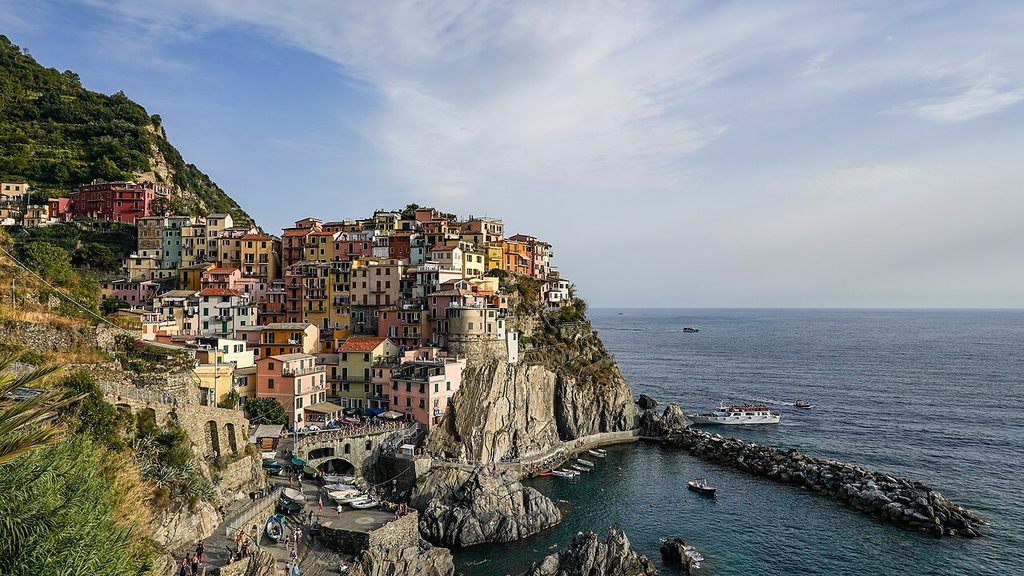
Picturesque Manarola town in Italy – CC-BY-SA License – Credit: Timothy Gonzalves

Brief Introduction to Manarola, Italy

Perched on a dramatic cliffside overlooking the Ligurian Sea, Manarola is often considered the most romantic and iconic of the five coastal villages that comprise Italy’s UNESCO-listed Cinque Terre. Famous for its vibrant case-torri—multi-colored Genoese tower houses that cascade down a steep, rocky ravine toward a narrow harbor—this postcard-perfect town captures the quintessential image of the Italian Riviera. With a permanent population of just around 350 residents, the pedestrian-only village retains an intimate, old-world allure defined by winding stone alleyways (caruggi), salty sea air, and wooden fishing boats parked along its main street.

Beyond its striking visuals, Manarola boasts a rich agricultural heritage built directly into the surrounding mountainsides. The village is enveloped by steep, hand-built stone terraces that locals have cultivated for centuries to grow lemons, olives, and wine grapes. It is particularly famous as the birthplace of Sciacchetrà, a sweet, amber-colored dessert wine prized since Roman times and crafted from sun-dried grapes harvested from these dizzying cliffside vineyards.

While day-trippers flock to the harbor rocks to swim in the deep turquoise waters or capture the glowing late-afternoon light from the Punta Bonfiglio viewpoint, Manarola offers a distinctly tranquil rhythm once the sun sets. Staying overnight or exploring during the shoulder seasons allows travelers to experience its authentic soul: enjoying a glass of local white wine at a cliffside aperitivo bar, walking the scenic coastal trails connecting neighboring villages, and falling asleep to the sound of waves crashing against the rocks below.

Click Here to Book a Tour of Manarola!

Walking Tour of Manarola, Italy

Watch this nice high quality walking tour video of Manarola.

How To Get To Manarola, Italy

THE GOLDEN RULE OF MANAROLA TRANSIT:

Do not drive into Manarola. The village is entirely pedestrianized. Driving involves narrow cliffside roads and ends at a ZTL (restricted zone) with an automated camera barrier. The small parking lot above the village charges ~€25–€30/day, fills up by 9:00 AM, and still leaves you with a 15-minute downhill hike with luggage. Take the train.

1. The Transit Engine: La Spezia & The Cinque Terre Express

Unless you approach from the north (Levanto), almost every trip to Manarola routes through La Spezia Centrale. This is the primary transit gateway where mainline Italian rail connects to the local coastal shuttle.

The Cinque Terre Express

  • Frequency: Every 15 minutes daily from mid-March through early November.
  • Duration: 11 minutes non-stop from La Spezia Centrale to Manarola.
  • Fares: Single ticket prices are seasonal (Green/Low: €5 | Yellow/Medium: €8 | Red/Peak: €10).
  • The Cinque Terre Card: If you plan on taking more than 3 train trips in a day or hiking the open coastal trails (like the Via dell’Amore), buy a Cinque Terre Treno Card (approx. €19.50–€32.50/day depending on seasonal tier). It includes unlimited rail travel between La Spezia and Levanto, plus required park trail passes.

2. Step-by-Step Routing from Major Gateways

A. From Pisa (Closest Airport – PSA)

  • Step 1: Board the automated PisaMover shuttle from Pisa Airport directly to Pisa Centrale station (5 mins; ~€6.50).
  • Step 2: Board a Trenitalia Regionale or Intercity train to La Spezia Centrale (45–60 mins; ~€10–€15).
  • Step 3: Transfer at La Spezia to the Cinque Terre Express directly to Manarola (11 mins).
  • Total Time: ~1 hour 25 minutes.

B. From Florence (Firenze SMN)

  • Step 1: Board a regional train (Regionale Veloce) from Firenze Santa Maria Novella bound for La Spezia Centrale (2 hours 15 mins; ~€15.50).
  • Step 2: Transfer at La Spezia Centrale to the local Cinque Terre Express train (11 mins).
  • Total Time: ~2 hours 30 minutes.

C. From Milan (Milano Centrale)

  • Step 1: Take a direct Trenitalia Intercity train from Milano Centrale south to Levanto or La Spezia Centrale (approx. 3 hours; ~€20–€35).
  • Step 2: Switch to the Cinque Terre Express for the final 10–15 minute run into Manarola.
  • Total Time: ~3 hours 15 minutes.

3. Alternative Transport Options

By Ferry (Seasonal & Scenic)

  • Operator: Consorzio Marittimo Turistico Cinque Terre (Navigazione Golfo dei Poeti).
  • Season: Runs daily from late March through October (weather permitting).
  • Routes: Direct boats connect La Spezia, Portovenere, and the other Cinque Terre towns (except landlocked Corniglia) straight to Manarola’s tiny marina.
  • Fares: Unlimited full-day ferry passes run ~€42 for adults.
  • Verdict: Unbeatable for arrival photos from the water. Skip if carrying heavy luggage—the boat gangway drops passengers onto a narrow, wet rock ledge with steep stairs leading into the harbor.

By Hiking Trail

  • The Via dell’Amore (Manarola to Riomaggiore): The famous, flat cliffside path links Manarola to Riomaggiore. Access requires a valid Cinque Terre Card plus a timed-entry slot booked via the National Park portal.
  • Volastra Trail (Trail 506): For experienced hikers, you can hike down into Manarola from the high hilltop village of Volastra through ancient terraced vineyards.

4. Arrival Logistics: What Happens at Manarola Station

Once your train stops at Manarola station, keep these arrival realities in mind:

  1. The Rock Tunnel: The platforms sit between two sheer cliff faces. To reach the village, follow the flow of foot traffic into the 150-meter pedestrian tunnel carved directly through the rock. It leads straight out to Via Discovolo (the main street).
  2. Terrain: There are no taxis inside Manarola. The town slopes steeply upward from the sea.
  3. Luggage Storage: If visiting on a day trip, leave heavy bags at the luggage deposit office (Deposito Bagagli) inside La Spezia Centrale station before hopping on the local train.

Click Here to Book a Tour of Manarola!

Things To Do In Manarola, Italy

1. The “Hero” Experience: Sunset at Punta Bonfiglio

The quintessential Manarola image—pastel tower-houses glowing gold against the Ligurian Sea—is captured from the cliffside promontory of Punta Bonfiglio.

Operational Specs: Free public access | 10-minute paved walk from the harbor | Best 1 hour before sunset.

How to Manage the Crowd:

  • Nessun Dorma: The famous cliffside wine bar sits directly on this ledge. They do not take advance reservations; you must download the Nessun Dorma App and join the digital queue when you are within 3–4 km of the village. Expect 1–2 hour wait times during peak season.
  • The Free Hack: Skip the bar line, buy a chilled bottle of local Cinque Terre DOC wine and a bag of focaccia from Burasca down in town, and walk past the restaurant to the public park upper level (Parco di Punta Bonfiglio) for the exact same view at zero cost.

2. Harbor & Waterfront Activities (The Lower Village)
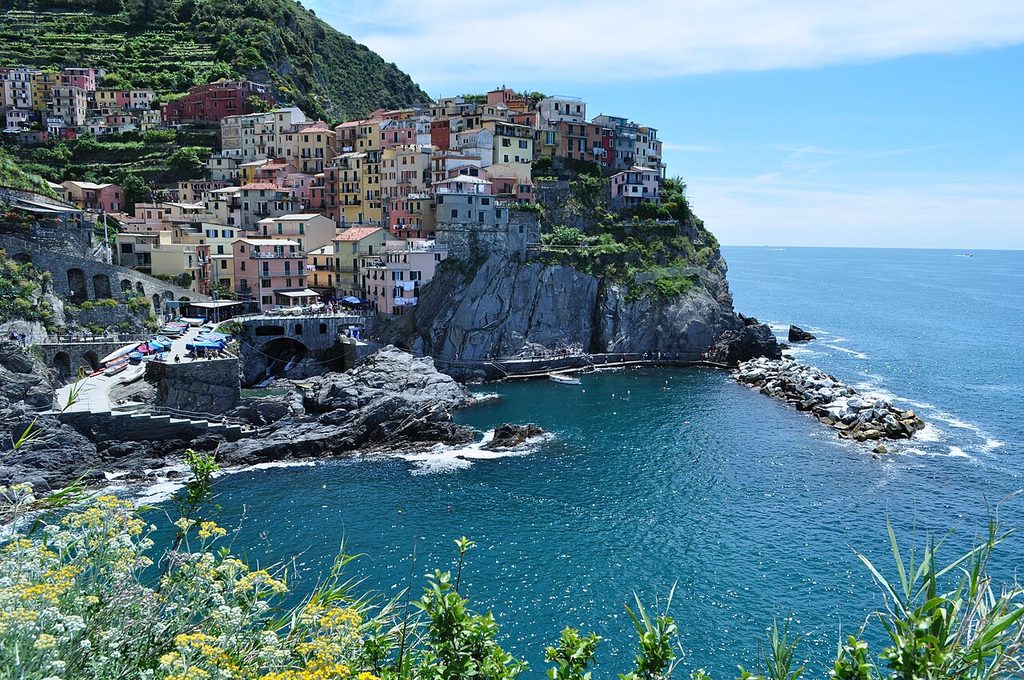
Manarola harbor – CC-BY-SA License – Credit: Waldemar L

Manarola has no sandy beach. The harbor (Marina di Manarola) is a narrow rocky fjord where local fishermen hoist their wooden boats (gozzi) onto the main street using a crane system.

Deep-Water Swimming & Rock Jumping:

  • Logistics: Swimmers enter via a metal ladder attached to the concrete boat ramp or by diving off the large flat rocks framing the bay. Water depths reach 3–6 meters directly off the rocks.
  • Safety Note: Avoid swimming when swell conditions are rough; the surge against the rock faces can make exiting difficult. Bring water shoes for grip.

Sunset Boat Cruises & Small-Group Excursions:

  • Local operators launch 2-hour sunset cruises directly from the harbor ledge. Expect onboard Ligurian focaccia, prosecco, and uncrowded views of all five Cinque Terre villages from the sea (~€70–€110 per person).

Walk the Via dell’Amore (Lover’s Lane):

  • Route: A flat, paved 1-kilometer cliffside trail hanging over the ocean, connecting Manarola directly to Riomaggiore.
  • Logistics: Requires a Cinque Terre Card + Via dell’Amore Supplement (~€10 additional) and a mandatory pre-booked timed-entry slot via the park portal. Traffic is strictly one-way from Riomaggiore to Manarola.
  • Take the Train to Riomaggiore: Board the Cinque Terre Express at Manarola Station and ride 1 stop to Riomaggiore (takes 2 minutes). Enjoy your walk from Riomaggiore to Manarola.

3. Vineyard & Trail Experiences (The Upper Slopes)
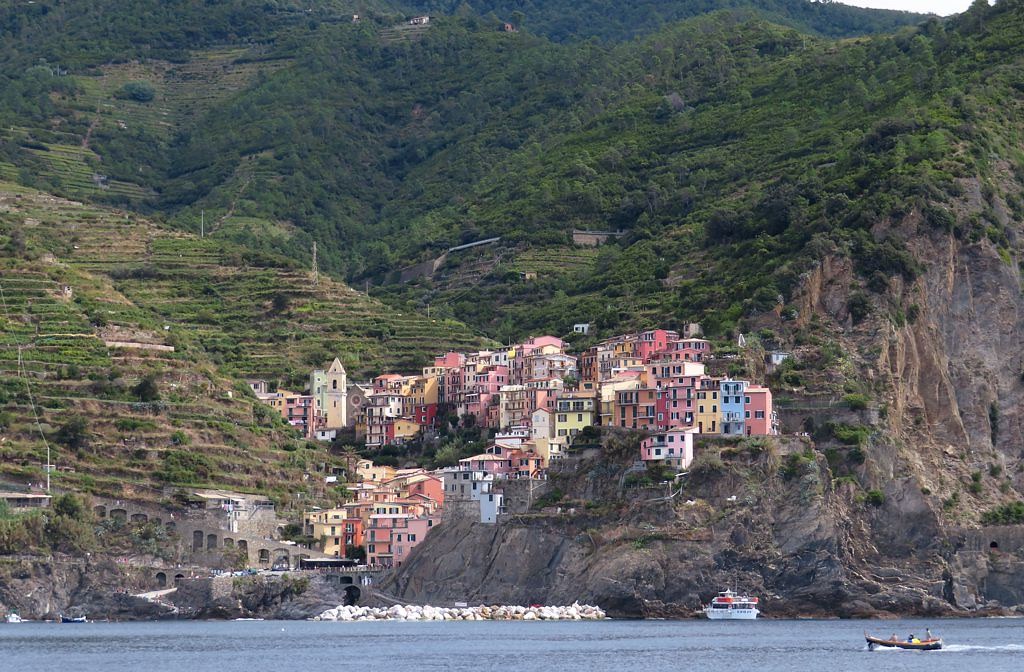
Picturesque Manarola vineyard terraces – CC-BY License – Credit: David Stanley

Manarola is surrounded by near-vertical stone terraces (ciàn) held up by ancient dry-stone walls.

  • Sample Sciacchetrà (Rare Dessert Wine):
    • Context: A sweet, amber-colored wine made from Boschera, Albarola, and Vermentino grapes dried on wooden racks (graticci) for months before pressing.
    • Where to Try: Visit Cantina Buranco or Capellini Luciano in the upper village for a guided tasting paired with local pecorino cheese.
  • Hike the Vineyard Trail (Trail 506 to Volastra):
    • Route: Leaves from behind the Church of San Lorenzo and ascends ~1,200 stone steps through active vineyards to the hilltop village of Volastra.
    • Logistics: Strenuous 1.5-hour climb up, but offers panoramic views over the sea without tour group crowds. You can take the local ATC bus back down to Manarola to save your knees.

Click Here to Book a Tour of Manarola!

4. Village Culture & Sights (The Upper Village)
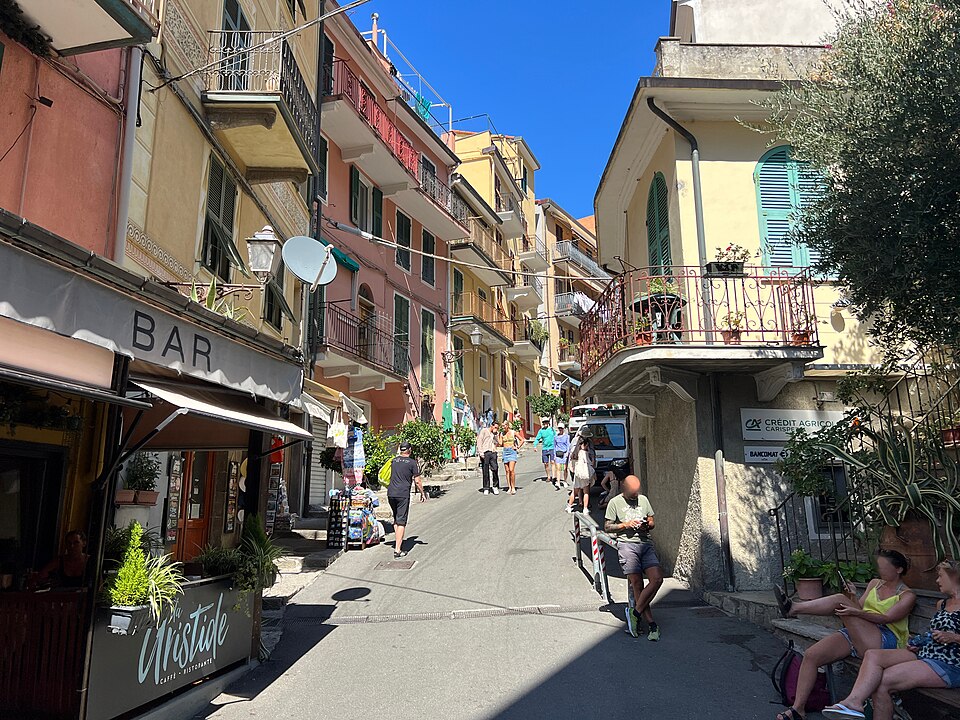
Via Discovolo – main street of Manarola – CC-BY-SA License – Credit: Chabe01

Stepping away from the harbor into the upper village reveals a quiet, traditional community pace.

  • Piazza Papa Innocenzo IV & Church of San Lorenzo:
    • Built in 1338 in Ligurian Gothic style, featuring a local Carrara marble rose window.
    • Historical Note: The standalone 14th-century square bell tower across the piazza was originally constructed as a military defense watchtower to spot Barbary pirate raids.
  • Explore the Quiet Caruggi:
    • Escape the main tourist street (Via Discovolo) by taking any set of covered stone staircases (caruggi) upward toward Via del Bambino. You will find quiet residential corners, laundry drying overhead, and hidden wine bars.

5. Presepe di Manarola (The World’s Largest Nativity Scene)
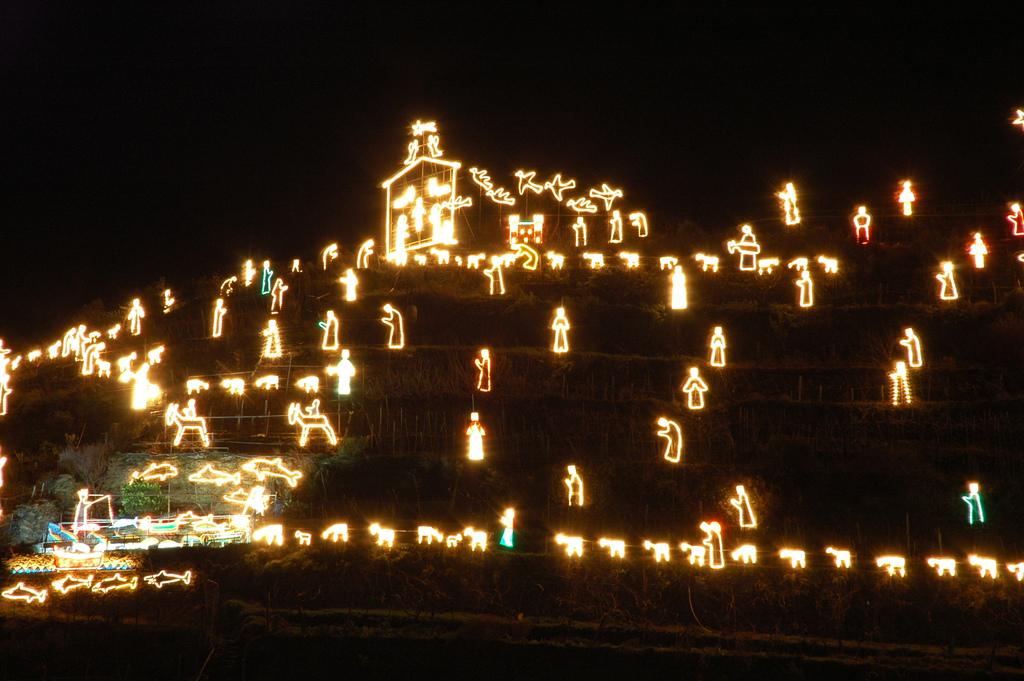
Nativity scene in Manarola – CC-BY License – Credit: Francesco Crippa
  • What It Is: On the hill of Colle Tre Croci above Manarola, local resident Mario Andreoli built the world’s largest illuminated nativity scene using over 17,000 light bulbs and 300 life-sized figures made from recycled materials.
  • Logistics & Seasonality: Lights up every year from early December through late January/early February.
  • Why Include It: If you visit in winter, this is the single biggest attraction in the entire Cinque Terre region. It can be seen glowing across the entire valley from Punta Bonfiglio.

6. The Groppo & Volastra Wine Cooperative (Cantina Sociale)

  • What It Is: Located in the tiny hamlet of Groppo (just above Manarola), the Cantina Cinque Terre is the regional winemaking cooperative responsible for preserving the steep terraced vineyards.
  • Logistics: Accessible via a 10-minute ride on the local green ATC minibuses from Manarola’s main street.
  • Why Include It: It is the best operational wine stop for serious wine enthusiasts who want to see modern stainless-steel processing alongside ancient grape-monorail systems (trenini) used during the harvest.

7. Paleochristian Ruins at Groppo & The Way of the Cross

  • What It Is: A quiet walking route marked by stone relief stations (Via Crucis) leading up through olive groves toward the historic Sanctuary of Our Lady of Health (Santuario della Madonna della Salute) in Volastra, dating back to the 10th century.
  • Why Include It: Perfect for culture seekers and travelers looking to escape the harbor crowds during peak afternoon hours (12:00 PM – 3:00 PM).

8. Kayaking & Paddleboarding from the Marina

  • What It Is: Guided sea-kayaking and stand-up paddleboard (SUP) tours departing directly from the rocky marina to explore hidden sea caves, waterfalls, and inaccessible coves between Manarola and Corniglia.

Click Here to Book a Tour of Manarola!

Tours in Manarola, Italy
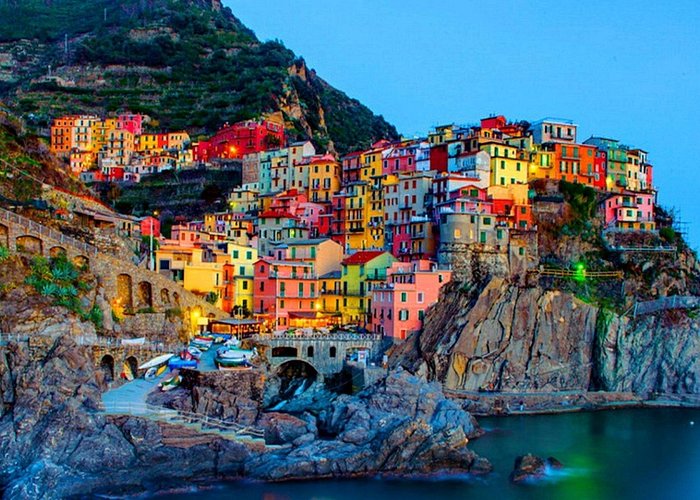
Cinque Terre Sunset Boat Tour

Enjoy stunning coastal views of Cinqueterre’s iconic villages from a unique vantage point as you cruise along the shore, from Manarola up until Punta Mesco. Small-group boat tours include plenty of enriching commentary from your captain on the history and culture of the Lingurian coastline and a chance to spot bottlenosed dolphins along the way. A small-group, captain-led Cinqueterre boat tour. See all five historic villages from a unique and scenic perspective. Book this Cinque Terre Sunset Boat Tour!
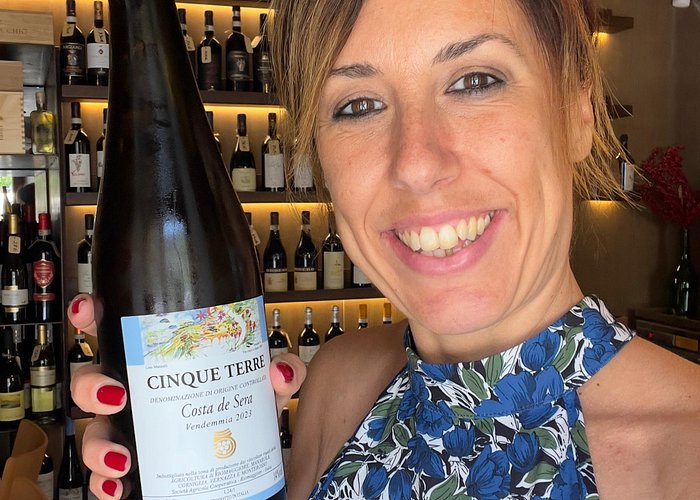
Manarola Wine Tasting Tour

Manarola wine tasting experience is a nice walk through the Manarola vineyards among panoramic points to take beautiful photos, good local wine and flavors, snacks and an exclusive moment in an amazing old cellar from the 1800s, relax and sharing at the convivial table, nice music. Book this Manarola Wine Tasting Tour!

Cinque Terre Private Hiking Tour
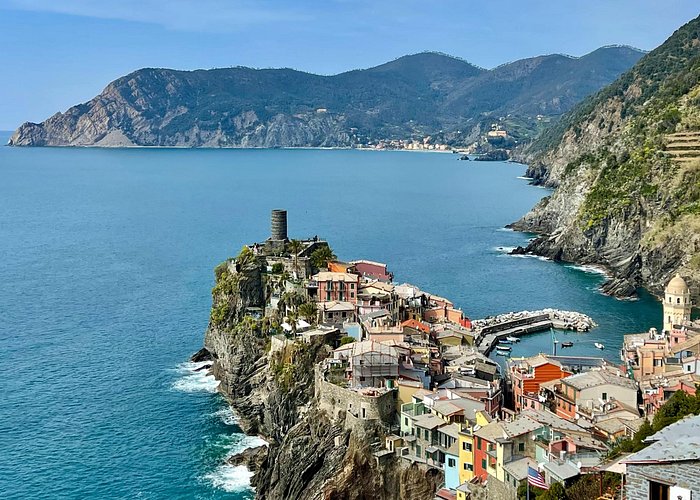
From Manarola to Corniglia through the hills overlooking the sea characterized by typical terraces made with dry stone walls that allowed the Ligurians, already in ancient times, to colonize a rugged and difficult territory. Five villages set in the rock, rich in local traditions and history. Crossing this territory on the ancient paths that connect the Cinque Terre gives glimpses of incomparable beauty on the sea and on the landscape characterized by Mediterranean scrub and vineyards, olive and citrus trees. You will be accompanied by an environmental Hiking Guide, in love with nature, plants and ancient local traditions. Book this Cinque Terre Private Hiking Tour!

Click Here to Book a Tour of Manarola!

Where to Stay in Manarola, Italy

There are virtually no large luxury hotels here. Accommodation in Manarola consists almost entirely of boutique guesthouses (affittacamere), restored hillside apartments, and family-run bed & breakfasts.

1. Critical Luggage & Elevation Warning

MANAROLA ACCOMMODATION RULE:

Check your hotel’s vertical steps before booking. Manarola has zero car access. Everything inside the village must be navigated on foot over steep inclines, narrow stone alleys, and flight after flight of stairs. If you bring large, heavy hard-shell suitcases, stay near the lower village/train station corridor (Via Discovolo bottom section). If you want panoramic sea views, be prepared to carry your bags up 100+ steps or pay for a local porter service (~€5–€10 per bag).

2. Neighborhood Breakdown: Lower vs. Upper Village

  • Lower Village & Marina (Low Strain / High Energy):
    • Best For: Day-trippers, travelers with luggage, fast train access.
    • Pros: Flat access through the main pedestrian tunnel; close to the harbor, water, and restaurants.
    • Cons: Noisier during peak hours (9:00 AM – 6:00 PM) as day-trippers stream through.
  • Upper Village & Church Quarter (High Elevation / Quiet & Scenic):
    • Best For: Overnight stays, romantic trips, panoramic sea views.
    • Pros: Peaceful evenings, incredible sunset perspectives, away from day-tripper noise.
    • Cons: Requires a steep 10-to-15-minute uphill trek from the station.

3. Vetted Accommodation Recommendations

A. High-End / Panoramic View Guesthouses

  • La Torretta Lodge (Upper Village)
    • The Vibe: Elegantly restored medieval tower-house offering stylish, contemporary rooms with private balconies directly overlooking the sea and vineyards.
    • Operational Perquisite: They offer luggage transfer service from the station—a massive benefit in Manarola.
    • Target Audience: Couples, honeymoons, luxury boutique seekers.
  • La Marina Piccola (Harbor Waterfront)
    • The Vibe: Nautical-style rooms situated right at the harbor edge above the sea.
    • Operational Perquisite: Practically zero stair climb from the harbor level; stunning morning sea views.

B. Mid-Range & Authentic Boutique Stays

  • Guesthouse Da Baranin (Upper Village)
    • The Vibe: Long-standing family-run B&B near the Church of San Lorenzo offering clean rooms, sea-view terraces, and homemade breakfast.
    • Target Audience: Mid-range travelers who want local hospitality and quiet nights.
  • Ca’ D’Andrean (Mid-Village)
    • The Vibe: Situated right on the main street (Via Discovolo) with a private lemon garden courtyard—a rare green oasis in Manarola.
    • Target Audience: Travelers who want a central location with minimal stair climbing.

C. Budget & Apartment Rentals

  • Hostel 5 Terre (Upper Village)
    • The Vibe: Clean, vibrant, and budget-friendly hostel/guesthouse offering dormitory beds and private budget rooms.
    • Target Audience: Solo travelers and budget backpackers.
  • Private Apartment Rentals (VRBO / Airbnb / Local Agencies):
    • Best For: Families or stays longer than 2 nights. Look for listings near Via del Bambino for balcony views, but double-check step counts with host beforehand.

Click Here to Book a Tour of Manarola!

Where to Eat and Drink in Manarola, Italy

1. The Ligurian & Cinque Terre Menu Cheat Sheet

Here is breakdown of what to order in Manarola:

  • Trofie al Pesto: Hand-rolled, twisted pasta served with authentic Ligurian pesto (traditionally pounded in a mortar with fresh basil, pine nuts, garlic, Parmigiano-Reggiano, Pecorino, and olive oil), boiled potatoes, and green beans.
  • Acciughe di Monterosso (Monterosso Anchovies): Served fried (fritte), salted, or marinated in lemon juice and olive oil. Local anchovies here are a delicacy, not a cheap pizza topping.
  • Fritto Misto di Mare: A takeaway paper cone filled with crispy fried calamari, shrimp, and local small fish, squeezed with fresh lemon.
  • Sciacchetrà DOC: A sweet, golden-amber dessert wine produced in limited quantities from dried grapes grown on Manarola’s stone terraces.
  • Focaccia al Formaggio (Style of Recco): Paper-thin, crispy unleavened bread stuffed with melted stracchino cheese.

2. Vetted Restaurant & Bar Recommendations

A. Sunset Drinks & Iconic Views

  • Nessun Dorma (Punta Bonfiglio)
    • The Vibe: The most famous wine bar in Cinque Terre, hanging directly over the cliff with unmatched views of the pastel village.
    • What to Order: A board of local cheeses and cured meats (tagliere), paired with a glass of Cinque Terre DOC white wine.
    • Operational Hack: Download the Nessun Dorma App 1–2 hours before sunset to join the virtual queue. You can track your number from anywhere in the village while walking around.
  • Cantina Capellini (Upper Village)
    • The Vibe: An authentic, family-run wine bar hidden in the stone terraces above the village.
    • What to Order: Sciacchetrà wine flights paired with local artisanal cheeses and bruschetta.

B. Sit-Down Trattorias & Seafood Dinner

  • Trattoria Dal Billy (Upper Village)
    • The Vibe: Tucked high up near the Church of San Lorenzo with outdoor terraced seating overlooking the sea and vineyards. Highly regarded by locals.
    • What to Order: Black ink pasta with fresh seafood (Tagliolini al Nero di Seppia) or whole salt-crusted catch of the day.
    • Logistical Note: Book 1–2 weeks in advance. Requires walking up ~100 steep steps from the main street.
  • Ristorante Marina Piccola (Harbor Front)
    • The Vibe: Waterside dining directly over the harbor, ideal for lunch after swimming.
    • What to Order: Trofie al Pesto or grilled local lobster.

C. Quick Street Food & Takeaway

  • Il Pescato Cucinato (Via Discovolo – Main Street)
    • The Vibe: A tiny takeaway joint serving hot paper cones of fried seafood.
    • What to Order: Mixed seafood cone (Fritto Misto) with extra lemon.
  • Panificio Impastiamoci (Mid-Village)
    • The Vibe: Traditional bakery serving hot, freshly baked Ligurian focaccia.
    • What to Order: Plain salted focaccia, onion focaccia, or pesto-topped slices.

Click Here to Book a Tour of Manarola!

Frequently Asked Questions (FAQs)

1: How much time do you need in Manarola?

A half-day (3 to 4 hours) is enough time to cover the essentials on a day trip: walking down the main street to the harbor, taking a swim off the rocks, walking up to the Punta Bonfiglio viewpoint, and grabbing a quick lunch or gelato.

However, staying overnight (1 night) is highly recommended. Once the last evening trains pull out around 6:00 PM, the day-tripper crowds vanish, allowing you to enjoy a quiet sunset aperitivo, dinner at a local trattoria, and an uncrowded early morning walk through the terraced vineyards.

2: Can you drive to Manarola and where do you park?

You should avoid driving to Manarola. The entire historic village inside is a strict ZTL (Zona a Traffico Limitato) closed to non-resident vehicles and monitored by automated fine cameras.

If you must drive:

  • The Parking Lot: There is a small paid parking lot (Posidonia) located on the cliff road roughly 800 meters above the village. It costs approximately €25–€30 per day.
  • The Catch: The lot has fewer than 80 spaces and typically fills up completely by 9:00 AM in peak season. Once parked, you must drag your luggage down a steep 10-to-15-minute downhill walk into town (and back up when leaving).
  • The Alternative: Park your car in the secure multi-story garage at La Spezia Centrale train station (Parcheggio Stazione) and take the 11-minute Cinque Terre Express train instead.

3: Does Manarola have a sandy beach?

No. Manarola does not have a traditional sandy beach or pebbled shore. Swimming takes place at the Marina di Manarola—a narrow, rocky cove. Access to the water is via concrete boat ramps, metal ladders fixed to the cliff face, or by jumping directly off the flat rocks framing the harbor.

If you are looking for a sandy beach with sun loungers and umbrella rentals, take the 8-minute train ride north to Monterosso al Mare (the only Cinque Terre town with a traditional beach).

4: How do you get to the famous Nessun Dorma bar, and do you need reservations?

Nessun Dorma sits on the cliff ledge at Punta Bonfiglio, offering the famous postcard view of Manarola.

  • Reservations: They do not accept advance email or phone reservations.
  • How to Get In: You must download the official Nessun Dorma App onto your phone. The digital waitlist opens daily when the venue opens (typically around 11:30 AM). You must be within a 3 to 4-kilometer radius of the village for the app’s GPS to allow you to join the queue.
  • Wait Times: During peak months (May–September), virtual queues routinely reach 100+ parties (a 1.5 to 2.5-hour wait). Track your position on the app while exploring the village or swimming, and head up to the cliff when your number is 10 slots away.

5: Is Manarola suitable for travelers with mobility concerns or heavy strollers?

Manarola is one of the steepest villages in Cinque Terre and poses significant challenges for travelers with limited mobility or large strollers.

  • Steep Incline: The main street (Via Discovolo) ascends continuously from the harbor up to the church square.
  • Stairs Everywhere: Accessing side alleys (caruggi), guesthouses, and viewpoints like Punta Bonfiglio requires navigating dozens of narrow, uneven stone steps.
  • Train Station Exception: The walk from the train station platform through the pedestrian tunnel to the lower main street is flat and paved, but moving anywhere beyond the lower main street involves steep inclines.

6: What is the best time of year to visit Manarola?

  • Best Overall (Shoulder Season): May to June and September to October. Expect warm weather, open boat tours, active hiking trails, and clear water for swimming, without the extreme July–August heat and heavy crowds.
  • Peak Summer (July–August): Very hot and crowded. Accommodation prices reach maximum rates, and popular spots fill up fast.
  • Off-Season / Winter (November–March): Quiet and peaceful, but ferry services pause, many restaurants and guesthouses close for the season, and coastal trails can close due to rain or sea surges. Exception: Visit between early December and January to see the hillside Presepe (the world’s largest illuminated nativity scene).
Click Here to Book a Tour of Manarola!

Filed Under: Italy

Lucca, Italy Travel Guide – Getting There & Things To Do

September 10, 2026 by charmingsmalltowns

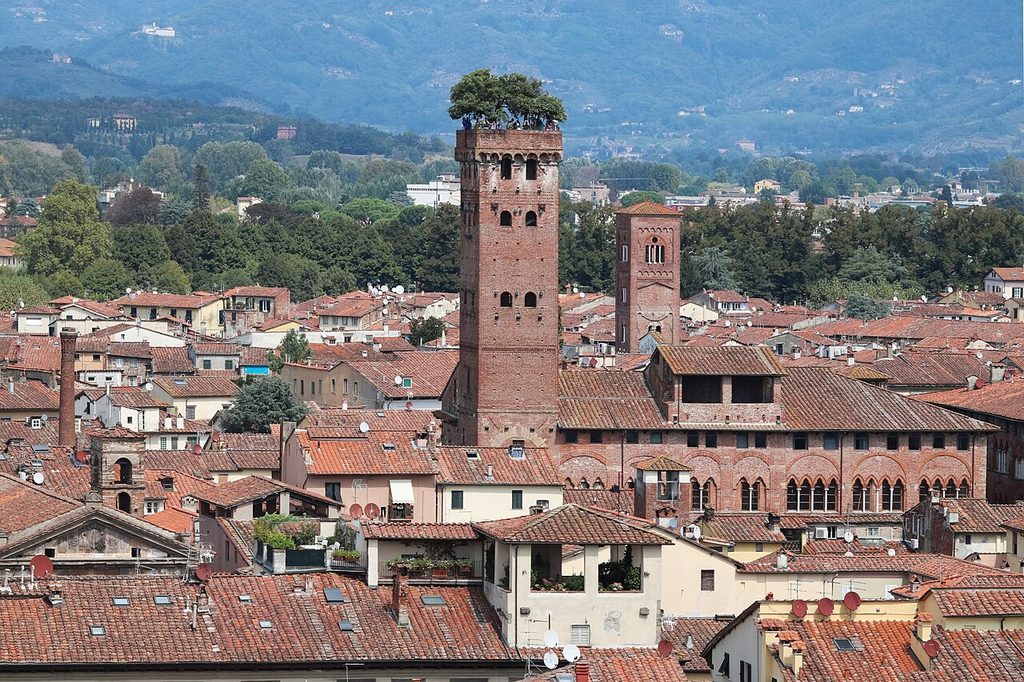
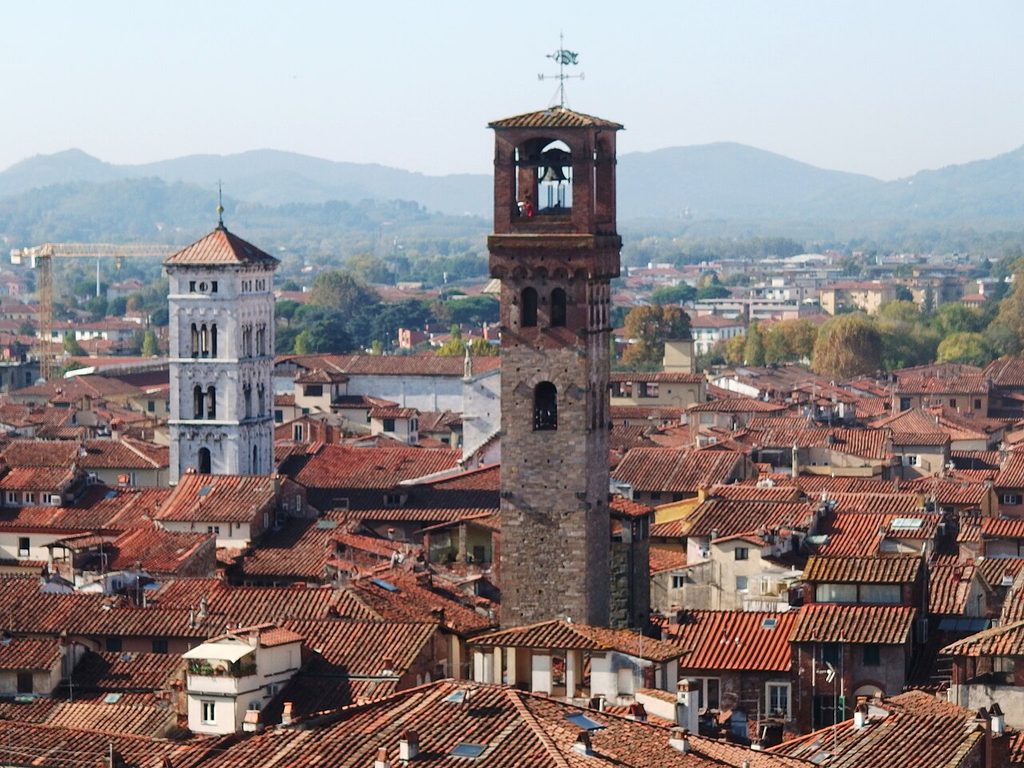
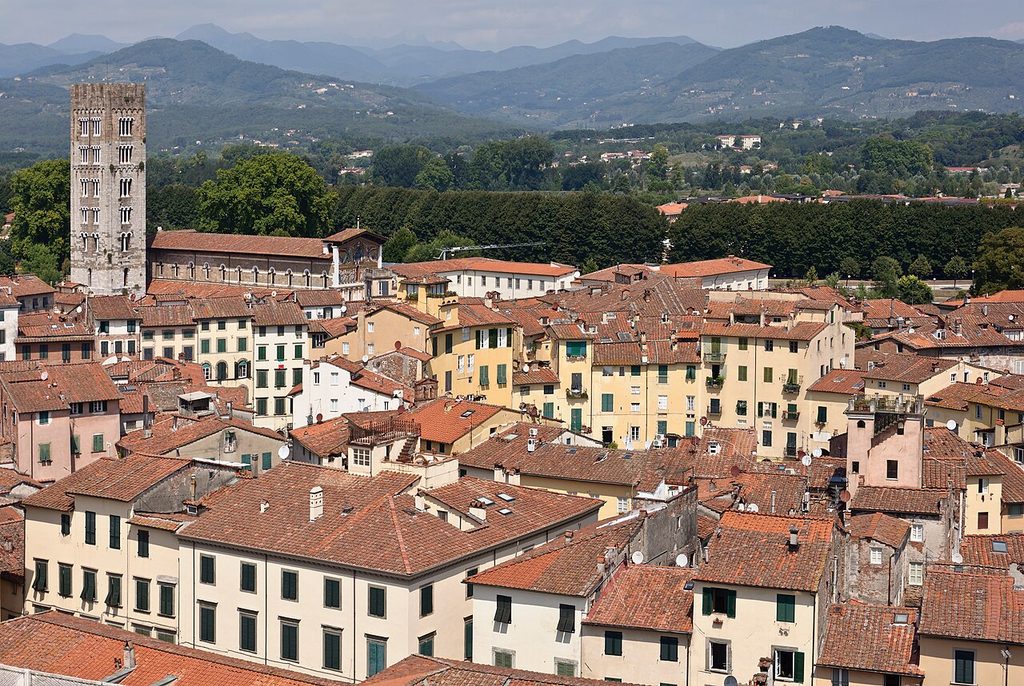
View of Lucca town as seen from Torre Guinigi – CC-BY-SA License – Credit: Myrabella

Brief Introduction to Lucca, Italy

Nestled along the Serchio River in northern Tuscany, Lucca is one of Italy’s most enchanting and well-preserved historic cities. Unlike many neighboring Tuscan towns whose fortifications were dismantled over time, Lucca is famously encircled by a complete ring of 16th-century Renaissance ramparts. Stretching 4.2 kilometers, these massive stone walls have been transformed into a lush, elevated public park where locals and visitors walk, run, and pedal bicycles shaded by centuries-old trees overlooking terracotta rooftops.

Step inside the pedestrianized gates, and the ancient Roman grid layout reveals a vibrant maze of cobblestone streets, bustling piazzas, and soaring medieval towers. Among its most iconic landmarks is the Piazza dell’Anfiteatro, a unique oval square built directly on the foundations of a 1st-century Roman amphitheater, and the Torre Guinigi, a 14th-century brick tower crowned by a garden of ancient holm oak trees offering panoramic views of the city. Intimate trattorias, historic silk-merchant palazzos, and magnificent Romanesque churches—such as the Cathedral of San Martino and San Michele in Foro—line every corridor.

Beyond its architectural beauty, Lucca boasts a rich cultural legacy as a historic republic and the birthplace of legendary opera composer Giacomo Puccini. Its flat, remarkably walkable center offers a delightfully relaxed pace compared to the dense tourist crowds of nearby Florence or Pisa. Whether enjoyed as a seamless day trip or an atmospheric base for slow Tuscan travel, Lucca encapsulates timeless Italian charm through its rich cuisine, historic squares, and living music tradition.

Click Here to Book a Tour of Lucca!

Walking Tour of Lucca, Italy

Watch this nice high quality walking tour video of the walled city of Lucca.

How To Get To Lucca, Italy

By Train (The Recommended Route)

From Florence (Firenze Santa Maria Novella station)

Taking the train from Firenze Santa Maria Novella (SMN) station to Lucca is direct, budget-friendly, and drops you right outside Lucca’s historic Renaissance walls.

Quick Journey Specs

  • Operator: Trenitalia (Regionale train)
  • Duration: ~1 hour 20 minutes (direct)
  • Ticket Cost: €8.90 one-way (fixed regional fare)
  • Frequency: Departs roughly every 30 to 60 minutes throughout the day

Step-by-Step Instructions

1. Buying Your Ticket

  • At SMN Station: Buy a ticket for the regional train (Regionale) at the yellow Trenitalia self-service kiosks or ticket counters. You can pay with cash or card.
  • Online: Purchase via the Trenitalia app or website.
  • Important Note: Regional train tickets do not have assigned seats or price surges—a ticket bought 5 minutes before departure costs the same as one bought weeks in advance.

2. Validation (Crucial Step)

  • If buying a paper ticket at the station: You must validate your ticket before stepping onto the train. Insert your ticket into the small green/white stamping machines near the tracks. Unvalidated tickets can incur an on-board fine.
  • If using the Trenitalia App: Check in digitally via the app before the scheduled train departure time.

3. Boarding at Firenze SMN

  • Check the main electronic departure boards (Partenze) for your train’s platform number (Binario).
  • Look for trains bound for Lucca, Viareggio, or Pisa Central (via Pistoia/Prato)—these all stop directly at Lucca.

4. Arriving in Lucca

  • You will step off at Lucca Stazione.
  • Exit the front of the station into Piazza Ricasoli.
  • Walk straight ahead for roughly 350 meters (a 3- to 4-minute flat walk).
  • Follow the pedestrian path through the underpass leading directly through Porta San Pietro, the main southern city gate into Lucca’s historic center.

Pro Traveler Tips

  • Luggage: If you are visiting Lucca as a day-trip stopover, drop your bags at Tourist Center Lucca, located directly across the street from the main train station exit, before walking into the city center.
  • Seat Selection: Sit on the right side of the train heading toward Lucca for pleasant views of the Tuscan countryside and foothills near Pistoia and Montecatini Terme.

Click Here to Book a Tour of Lucca!

From Pisa (Pisa Centrale station)

Traveling from Pisa Centrale station to Lucca is one of the easiest, fastest regional train connections in Tuscany. Because the two cities sit just 17 kilometers apart, taking the train is significantly faster and easier than driving or taking a bus.

Quick Journey Specs

  • Operator: Trenitalia (Regionale train)
  • Duration: 25 to 30 minutes (direct)
  • Ticket Cost: €4.10 one-way (fixed regional fare)
  • Frequency: Departs every 30 minutes throughout the day

Step-by-Step Instructions

1. Buying Your Ticket

  • At Pisa Centrale: Purchase a ticket at the automated Trenitalia kiosks (available in multiple languages) or at the main ticket counter. Both accepts cash and major credit cards.
  • Online/App: Buy directly via the Trenitalia app or website.
  • Pricing Note: Regional train prices are fixed—tickets cost the same whether bought weeks in advance or 5 minutes before boarding.

2. Ticket Validation

  • Paper Tickets: If you buy a physical paper ticket at the station, you must validate it before stepping onto the train. Insert it into the small green-and-white (or yellow) stamping machines near the platform entrances.
  • Digital Tickets: If purchased on the Trenitalia app, open your ticket on your phone and tap Check-in before the train’s scheduled departure time.

3. Boarding at Pisa Centrale

  • Look at the main electronic departure boards (Partenze) in the station lobby for your platform number (Binario).
  • Check for trains where the final destination is Lucca, Aulla Lunigiana, or Pistoia—these routes all stop directly at Lucca.

4. Arriving in Lucca

  • You will arrive at Lucca Stazione.
  • Step off the train and head through the main station hall into Piazza Ricasoli.
  • Walk straight ahead across the plaza (roughly 350 meters) to reach the pedestrian underpass passing directly through Porta San Pietro, the southern entrance to Lucca’s walled city center.

Connecting from Pisa Airport (PSA)

If you are flying into Pisa International Airport (Galileo Galilei) and heading straight to Lucca:

  1. Take the PisaMover: Follow the signs inside the airport terminal to the PisaMover automated shuttle (~€6.50 one-way). It runs every 5–10 minutes and takes 5 minutes to reach Pisa Centrale.
  2. Transfer to the Train: Exit the PisaMover platform at Pisa Centrale, buy your regional ticket to Lucca at the kiosk, and board the train.
  3. Total Travel Time: Roughly 45 minutes end-to-end from the airport arrival hall to Lucca’s city walls.

Click Here to Book a Tour of Lucca!

By Car: Parking & ZTL Restrictions

Driving to Lucca gives you total freedom to explore the surrounding Tuscan countryside, but where you pick up the car and how you handle parking are critical to avoiding costly fines.

Here is everything you need to know about picking up a rental car, driving the routes, and parking legally in Lucca.

Part 1: Where to Pick Up Your Rental Car

Option A: Pick Up in Florence (Best if starting your trip there)

  • Airport Pick-Up (Florence Amerigo Vespucci – FLR): Recommended. The airport’s rental car center (Palagio degli Spezzani) sits right off the A11 motorway. Picking up here completely eliminates the risk of driving into Florence’s strict inner-city ZTL zone. Take the T2 Tram line from Santa Maria Novella station directly to the airport (20 minutes).
  • City Center Pick-Up (Via Maso Finiguerra / Borgo Ognissanti): Most major agencies (Hertz, Avis, Sixt) have offices near SMN station. Warning: You must strictly follow the agency’s exact designated exit route to avoid automated ZTL fine cameras.

Option B: Pick Up in Pisa (Easiest drive to Lucca)

  • Pisa Airport (PSA) Rental Car Center: Located just 2.5 km from Pisa Centrale, this dedicated terminal hosts every major rental provider. Driving from Pisa Airport to Lucca takes only 25–30 minutes along straightforward regional roads (SS12) or the highway.

Part 2: Driving Routes to Lucca

  • From Florence: Take the A11 Motorway (Autostrada Firenze-Mare) heading west toward Pisa Nord/Viareggio.
    • Drive Time: ~1 hour to 1 hour 15 minutes (75 km) depending on traffic.
    • Tolls: The A11 is a toll road. Take a ticket at the entry toll booth and pay with a credit card or cash in the white or blue lanes when exiting at Lucca Est. Avoid the yellow Telepass lanes.
  • From Pisa: Take the SS12 (Statale del Brennero) direct road north, or the A11/A12 motorway combination.
    • Drive Time: ~25 to 30 minutes (20 km).

Part 3: The Golden Rule: Respecting the ZTL (Zona a Traffico Limitato)

The moment you approach Lucca, remember this rule: Do not drive through the arches of the city walls.

LUCCA ZTL

(Historic Center Inside the Renaissance Walls)

  • NO UNAUTHORIZED DRIVING FOR NON-RESIDENTS
  • Monitored 24/7 by automated camera gates
  • Fine: €110 – €150+ per camera entry

The Hotel Exception: If you booked a hotel inside the walls, you may drive in briefly to drop off luggage ONLY IF you send your rental car’s license plate number to your hotel 48 hours prior so they can log it with the local police.

Part 4: Where to Park Outside the Walls

Park in designated lots located along the ring road (Circonvallazione) right outside the city gates.

Parking LotLocationRates & TypeBest For
Parcheggio CarducciSouth-West (Viale Carducci)~€1.00/hr (Blue Lines)Best Overall: 4-minute walk to Porta Sant’Anna or Porta San Pietro.
Parcheggio MazziniEast (Via Mazzini)~€0.50–€1.00/hr (Underground)Shaded & Secure: Underground lot right near Porta Elisa.
Parcheggio PalatucciNorth-West Ring Road~€0.20 first hr / €1.00 hrBudget Option: 8-minute walk to Porta San Donato.

Understanding Parking Line Colors in Italy

  • Blue Lines: Paid public parking. Pay at the nearby ticket meter (parcometro) using coins or card, and place the paper slip on your car dashboard.
  • White Lines: Free public parking (rare near the walls, always check vertical signs for time limits).
  • Yellow Lines: STRICTLY RESERVED for residents. Never park here or you risk being towed.

Click Here to Book a Tour of Lucca!

Map of Lucca, Italy

By Bus & Regional Shuttles

Taking the bus to Lucca offers one distinct advantage over the train: regional buses drop passengers off at Piazzale Verdi, located inside the city walls on the western side of the historic center.

All public bus transit across Tuscany is unified under the operator Autolinee Toscane (AT).

Primary Bus Routes to Lucca

1. From Florence (Firenze T2 Guidoni / Santa Maria Novella)

While the direct train is generally preferred for speed, regional highway buses provide a reliable connection along the A11 corridor.

  • Departure Points: Firenze T2 Guidoni (accessible via the T2 Tram line from SMN station) or Piazzale Montelungo near SMN station.
  • Duration: ~1 hour 15 minutes to 1 hour 30 minutes depending on motorway traffic.
  • Fare: ~€6.00 – €8.00 single trip.
  • Best Use Case: Useful when traveling directly from Florence Airport (FLR) or during train strikes.

2. From Pisa (Pisa Center & Airport)

Buses running between Pisa and Lucca connect key points not directly served by the main rail line.

  • Departure Points: Pisa – Via Crispi (near Pisa Centrale) or Pisa Airport terminal.
  • Duration: ~40 to 45 minutes.
  • Fare: ~€3.00 – €4.50.
  • Best Use Case: Convenient for travelers departing from western Pisa or coastal intercity routes.

3. From Coastal Versilia (Viareggio / Forte dei Marmi)

Regional buses running from the Tuscan coast frequently run directly into Lucca, making them ideal for beach day trips.

  • Duration: ~35 to 50 minutes.
  • Fare: ~€3.50 – €5.00.

How to Buy & Validate Bus Tickets

  1. Digital Tickets (Easiest): Download the at-bus app (Autolinee Toscane) or use the at-bus contactless payment system on board by tapping a contactless credit card or phone against the green reader upon boarding.
  2. Paper Tickets: Purchase tickets in advance at official ticket offices, tabacchi (tobacco shops displaying the blue “T” sign), or newsstands.
  3. Boarding Rule: Board through the front doors. If using a paper ticket, insert it immediately into the orange or green validation machine near the driver. Unvalidated tickets trigger stiff local fines.

Arriving at Piazzale Verdi Terminal

  • Location: Piazzale Verdi sits right inside Porta San Donato on the western edge of the historic core.
  • Immediate Access: Stepping off the bus places you directly in front of the main Lucca Tourist Information Office.
  • Onward Navigation: From the square, Via San Paolino leads directly east into the heart of the historic center toward Piazza San Michele (a 5-minute flat walk).

Click Here to Book a Tour of Lucca!

Things To Do In Lucca, Italy

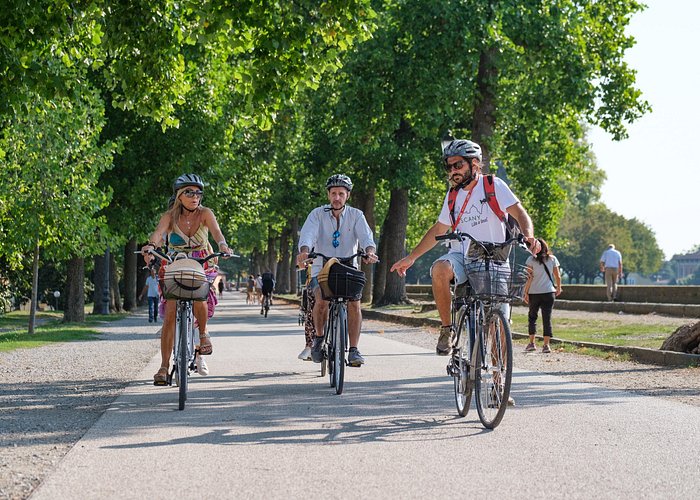
1. Cycle or Stroll the Renaissance Wall Promenade (Mura di Lucca)

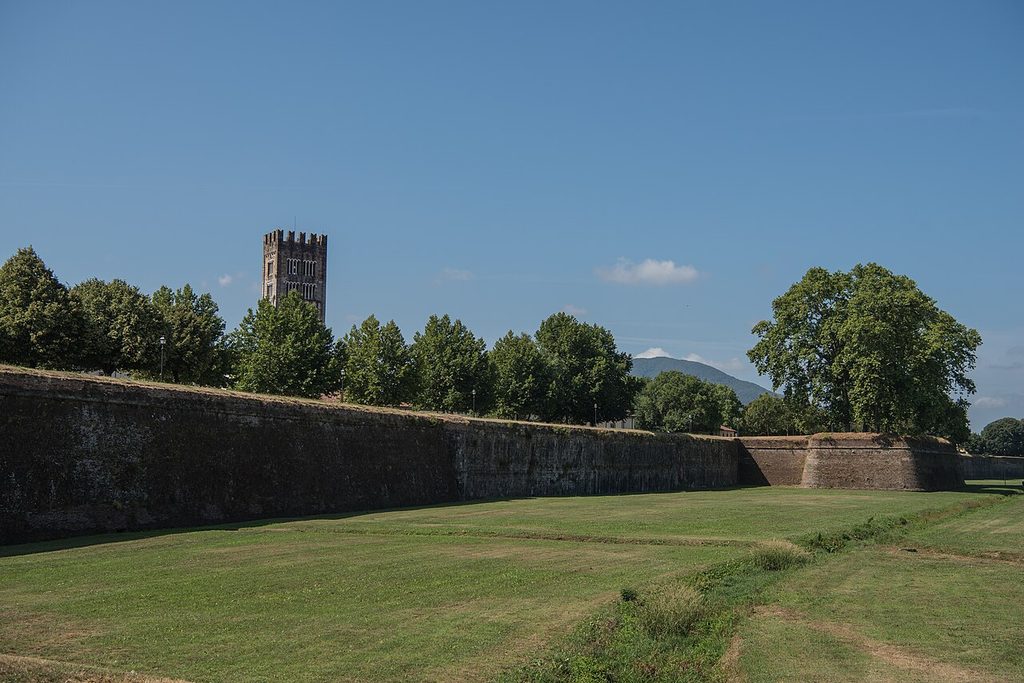
City walls of Lucca – CC-BY-SA License – Credit: Alex Genova

Lucca’s most famous icon is its 4.2-kilometer ring of Renaissance fortifications. Constructed between the 15th and 17th centuries, these massive brick walls were never breached in warfare. In the 19th century, they were repurposed into a wide, tree-lined elevated public park encircling the entire historic city center.

  • Operational Specs: Free 24/7 access | 4.2 km loop | ~30 mins by bike, ~60 mins on foot.
  • Rental Hubs: Rent a city cruiser or e-bike at shops near Porta San Pietro (south) or Piazza Santa Maria (north). Average rates run €4–€5/hour or €15–€20/day. Family pedal buggies (“surrey bikes”) are also widely available.
  • Traveler Tip: Ride the top of the walls for the broad city view, but dismount when descending into the narrow cobblestone lanes inside the gates—cycling in the dense foot-traffic streets is bumpy and regulated.

2. Scale the Oak-Crowned Guinigi Tower (Torre Guinigi)

The spectacular Torre Guinigi – CC-BY-SA License – Credit: Ingo Mehling

Built in the 14th century by wealthy silk merchants, this 44.5-meter brick tower is famous for the grove of ancient holm oaks growing from its rooftop garden. The trees were planted by the Guinigi family as a symbol of rebirth and prestige.

  • Operational Specs: €6.00 ticket | 230 steps | Open daily from 9:30 AM.
  • Crowd Strategy: Advance online timed tickets are strongly recommended during peak season (May–October). Visit right at the 9:30 AM opening or during late afternoon golden hour for optimal lighting over the terracotta roofs.
  • Safety Warning: The final leg of the ascent transitions to an open-metal interior staircase suspended inside the hollow tower shaft, which can trigger vertigo.

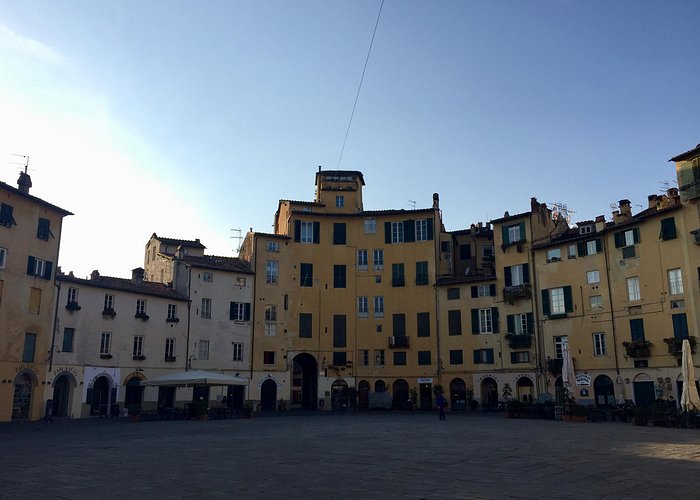
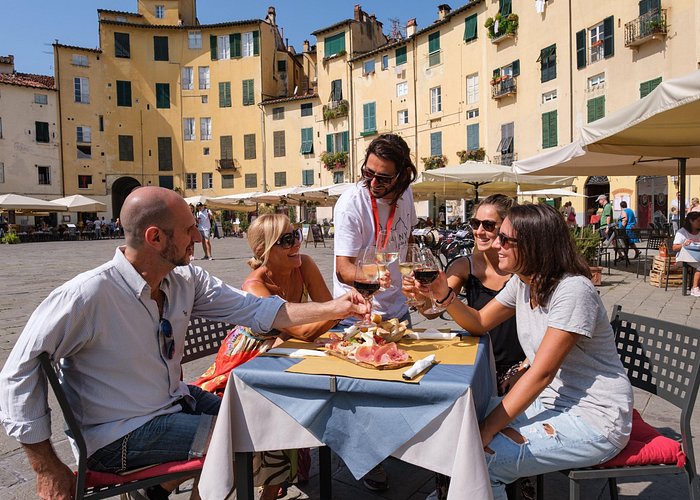
3. Stand Inside the Oval Piazza dell’Anfiteatro

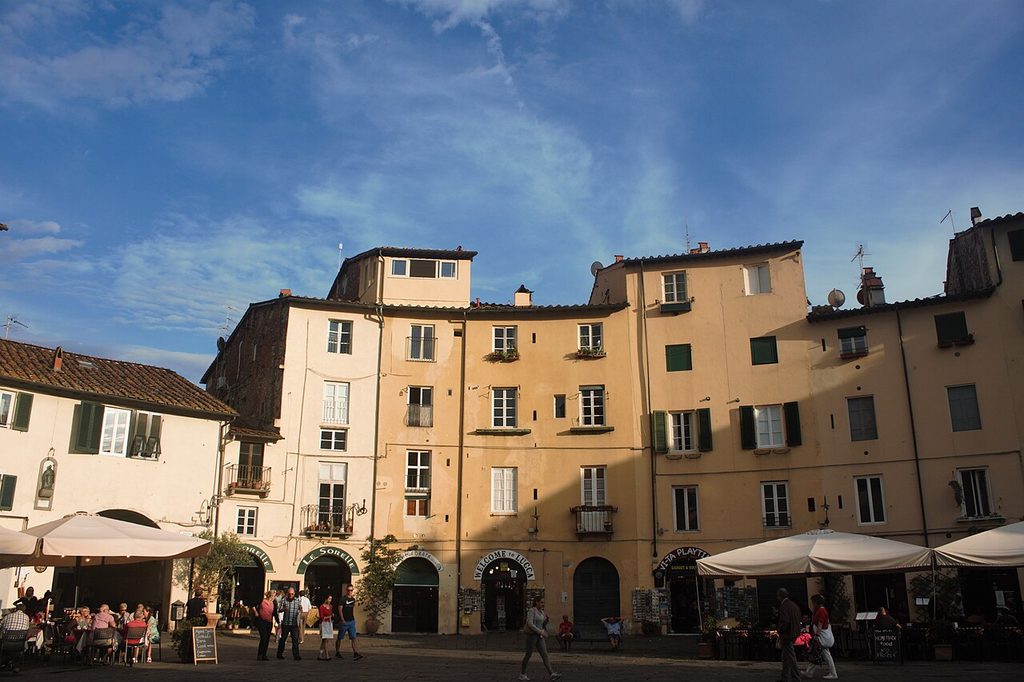
Piazza dell’Anfiteatro – CC-BY-SA License – Credit: Giulia Cannarella

This striking, enclosed plaza sits directly on the footprint of a 1st-century Roman amphitheater. Over the centuries, medieval buildings were constructed against the ancient outer arches, preserving the arena’s distinctive elliptical shape.

  • Operational Specs: Free public access | Entered via 4 vaulted gateway arches.
  • Smart Visitor Strategy: Grab a morning espresso or evening Aperol Spritz at an outdoor café table to enjoy the oval architecture. However, avoid ordering full dinner meals in the plaza itself—prices carry a heavy location markup. Walk two alleys back to local trattorias for authentic regional dining.

Click Here to Book a Tour of Lucca!

4. Explore the Cathedral of San Martino (Duomo di San Martino)

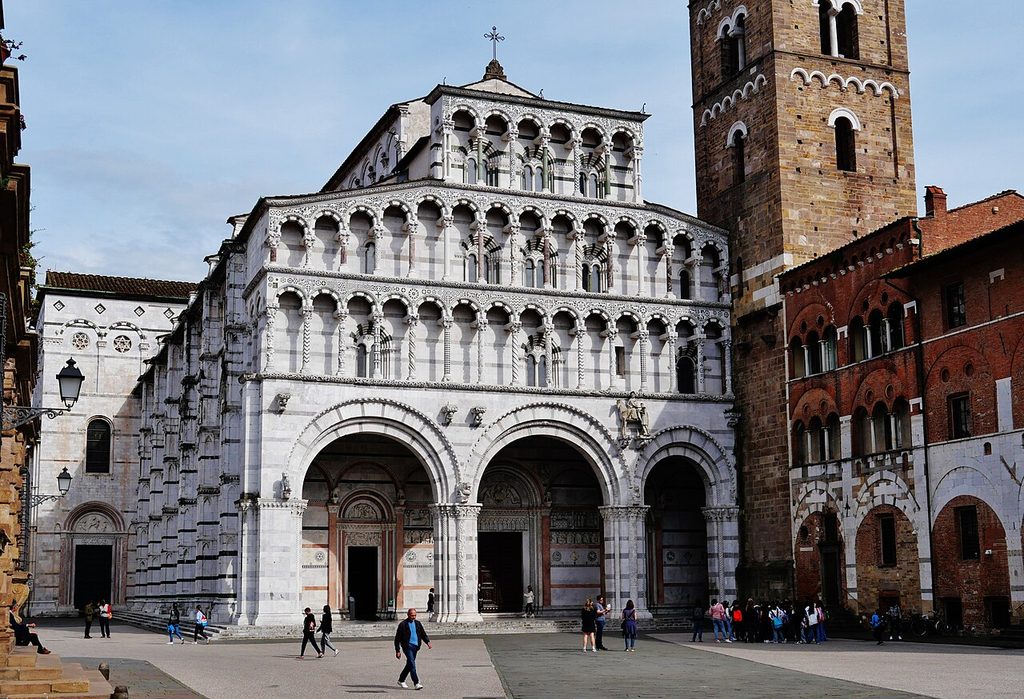
Cathedral of San Martino – CC-BY License – Credit: Zairon

Located in a quiet plaza on the southern edge of the historic core, Lucca’s main cathedral features an asymmetrical Romanesque façade decorated with intricately carved marble columns.

  • Operational Specs: €3.00–€10.00 depending on combined pass (includes Church, Museum, and Bell Tower).
  • Key Masterpieces inside:
    1. The Volto Santo (Holy Face): A cedarwood crucifix traditionally believed to have been carved by Nicodemus, an eyewitness to the Crucifixion (currently undergoing careful restoration inside a clear glass workshop booth).
    2. Tomb of Ilaria del Carretto: A marble funerary monument sculpted by Jacopo della Quercia in 1406, depicting a young noblewoman with a loyal dog sleeping at her feet.

5. Admire the Soaring Façade of San Michele in Foro

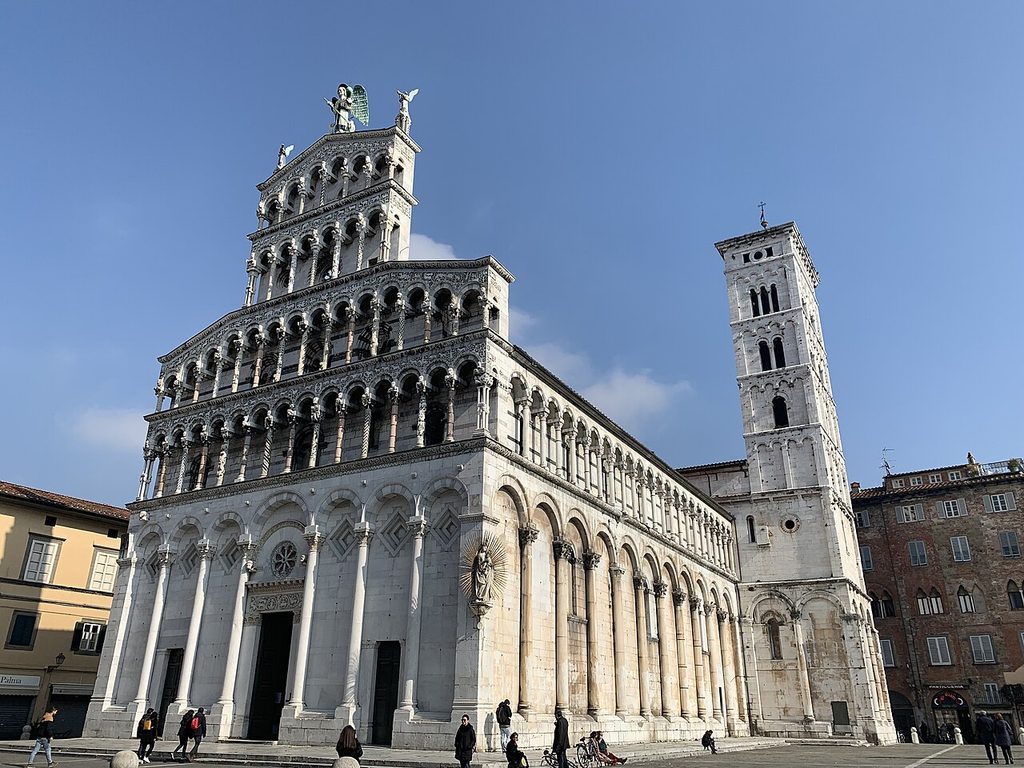
Facade of San Michele in Foro church – CC-BY License – Credit: Photo2023

Built directly over the site of the ancient Roman Forum, this 12th-century church boasts one of Tuscany’s most ornate Romanesque façades. Four tiers of marble arcades rise high above the roofline, crowned by a 4-meter bronze statue of the Archangel Michael slaying a dragon.

  • Operational Specs: Free entry to the main nave | Small fee for crypt access.
  • Mid-Morning Stop: After visiting the church, step across Piazza San Michele to Pasticceria Taddeucci to try Buccellato—a traditional sweet bread studded with raisins and flavored with aniseed, baked in Lucca since 1881.

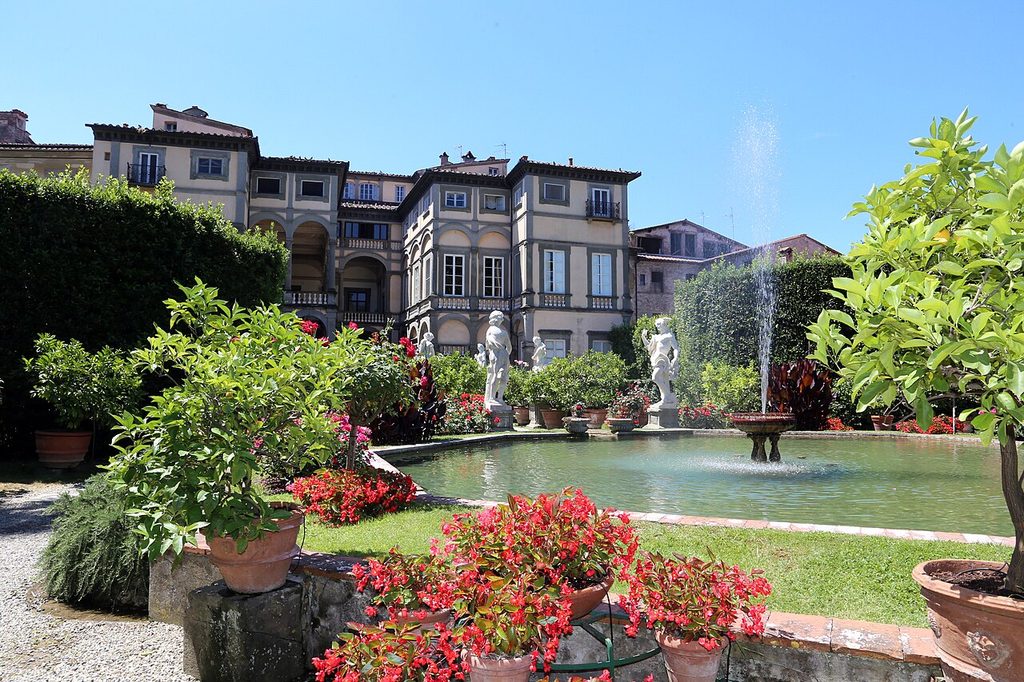
6. Tour the Baroque Gardens of Palazzo Pfanner

Garden in Palazzo Pfanner – CC-BY License – Credit: Sailko

Located on the northern edge of the city walls, this 17th-century palace features lush, formal Italian gardens filled with lemon trees, ornamental fountains, and 18th-century marble statues representing the Greek gods.

  • Operational Specs: €10.00 (Combined Palace & Garden ticket) | Open March 14 to December 31.
  • Pop-Culture Note: Movie buffs will recognize these manicured garden pathways from the film The Portrait of a Lady, starring Nicole Kidman.

Click Here to Book a Tour of Lucca!

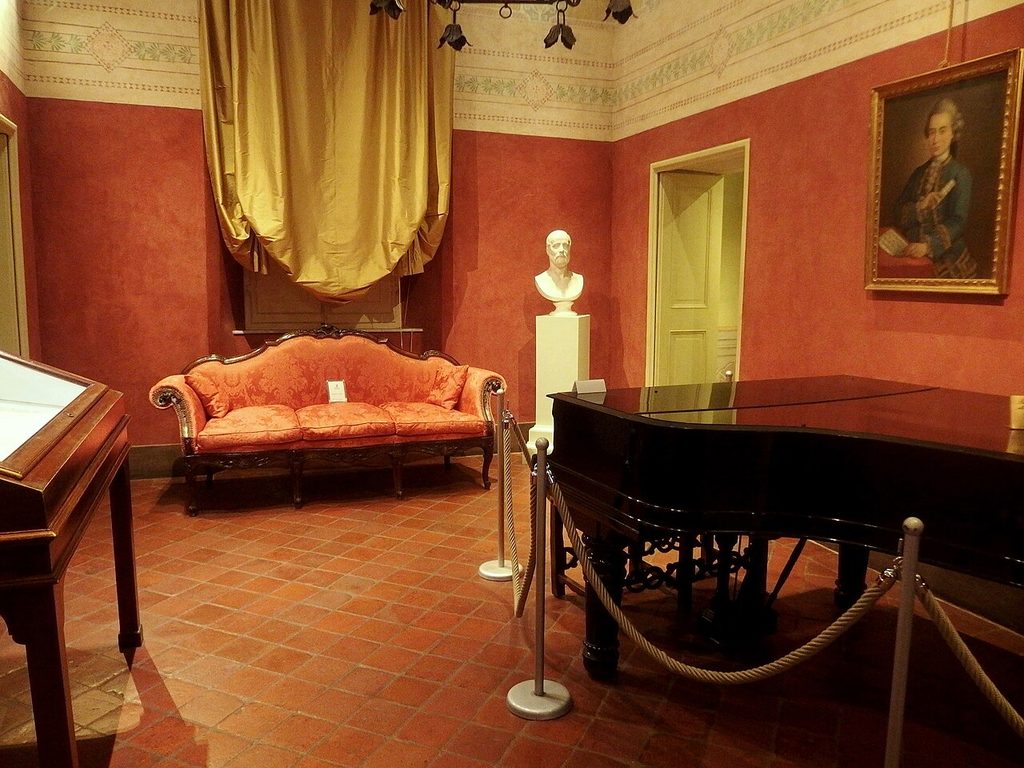
7. Visit the Puccini Birthplace Museum (Museo Puccini)

Inside the Puccini Museum – CC-BY-SA License – Credit: Palickap

Lucca is the birthplace of legendary opera composer Giacomo Puccini (La Bohème, Tosca, Madama Butterfly). The house where he was born in 1858 at Corte San Lorenzo 9 has been preserved as an intimate museum.

  • Operational Specs: €9.00 entry | Audio guides available in multiple languages.
  • What’s Inside: Original hand-written music scores, personal letters, his costume collection, and the Steinway & Sons piano he used while composing his final opera, Turandot.

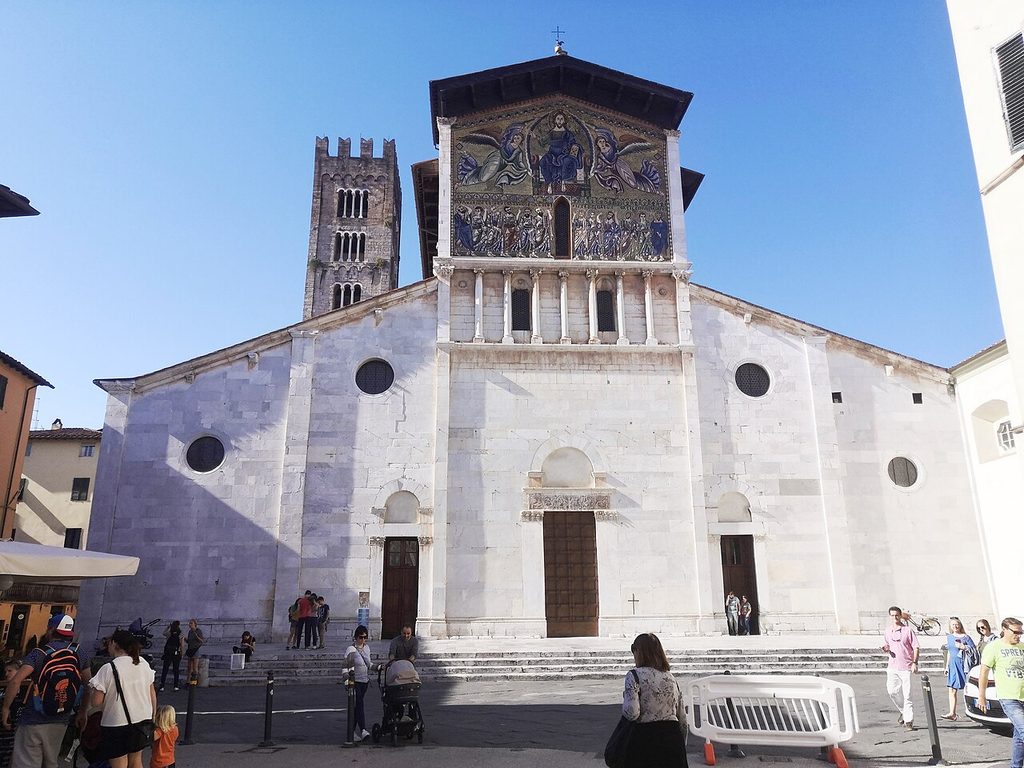
8. Marvel at the Golden Mosaic of the Basilica di San Frediano

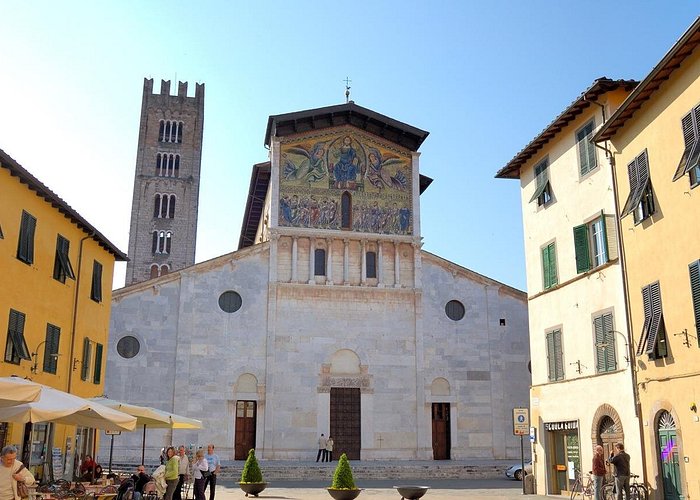
Facade of Basilica di San Frediano – CC-BY-SA License – Credit: Palickap

While the Duomo holds the famous art treasures, San Frediano offers the most striking exterior view in Lucca. The façade features a massive 13th-century Byzantine-style gold mosaic depicting the Ascension of Christ, which glows brilliantly under direct afternoon sunlight.

  • Operational Specs: €3.00 ticket (or included in combined church passes) | Open daily.
  • Key Masterpiece Inside: The Fontana Lustrale, a massive 12th-century Romanesque baptismal font carved with detailed relief scenes depicting the story of Moses.
  • Traveler Tip: Position yourself across the plaza at the corner of Via Fillungo around 3:00–4:00 PM for the best photo lighting on the gold facade.

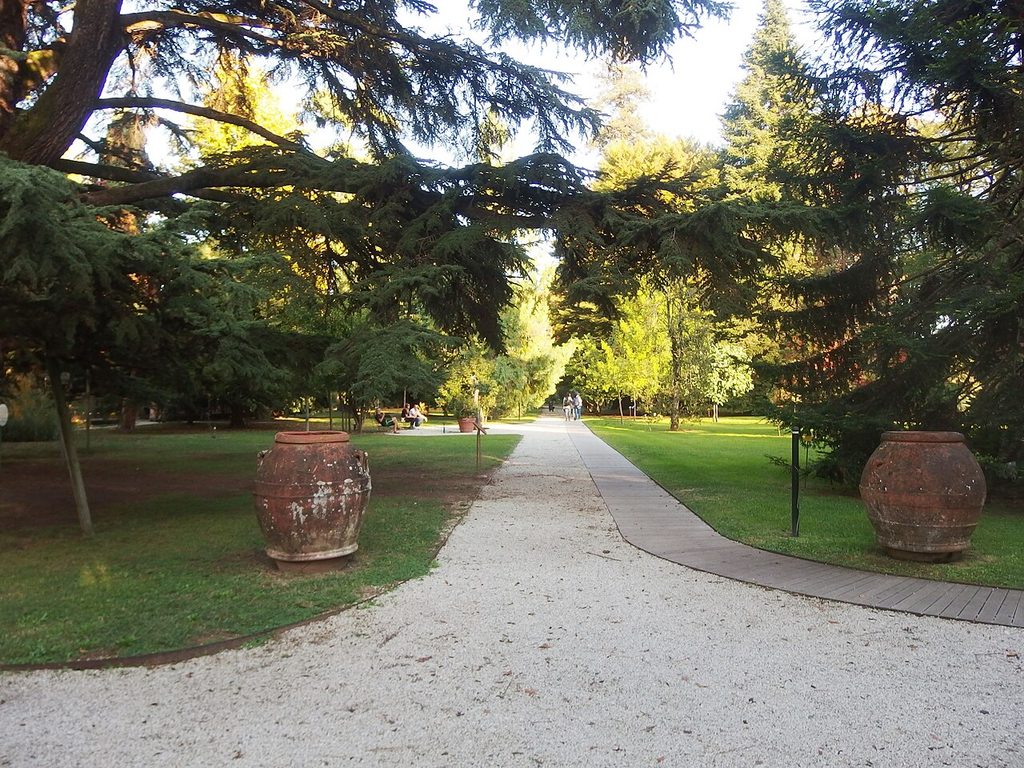
9. Relax in the Orto Botanico Comunale di Lucca (Botanical Gardens)

Botanical Garden of Lucca – CC-BY-SA License – Credit: Palickap

Tucked directly against the southeastern ramparts of the city walls, this 2-hectare botanical garden was established in 1820 by Marie Louise, Duchess of Parma. It provides a quiet, shaded refuge from the busier tourist streets.

  • Operational Specs: €6.00 ticket | Open April through October.
  • Highlights: A towering 22-meter Cedar of Lebanon planted in 1822, greenhouses filled with tropical succulents, and a central water lily pond.
  • Local Legend: Local folklore claims the pond is haunted by Lucida Mansi, a 17th-century Lucchese noblewoman who sold her soul to the devil to retain her youth.

Click Here to Book a Tour of Lucca!

10. Climb the Torre delle Ore (Clock Tower)

Torre delle Ore – CC-BY-SA License – Credit: Palickap

If you want an unobstructed photo of the famous oak trees atop the Torre Guinigi, this is the tower to climb. Standing 50 meters tall on Via Fillungo, it is the highest of the remaining medieval towers in Lucca.

  • Operational Specs: €6.00 ticket | 207 wooden steps | Open seasonally.
  • What Makes It Unique: You climb directly past the exposed, hand-wound 18th-century mechanical clockwork mechanism designed by Louis Simon.
  • Climbing Advice: Time your ascent so you aren’t standing next to the open belfry bells right on the hour mark when they strike loudly!

11. Go Underground at the Domus Romana Site

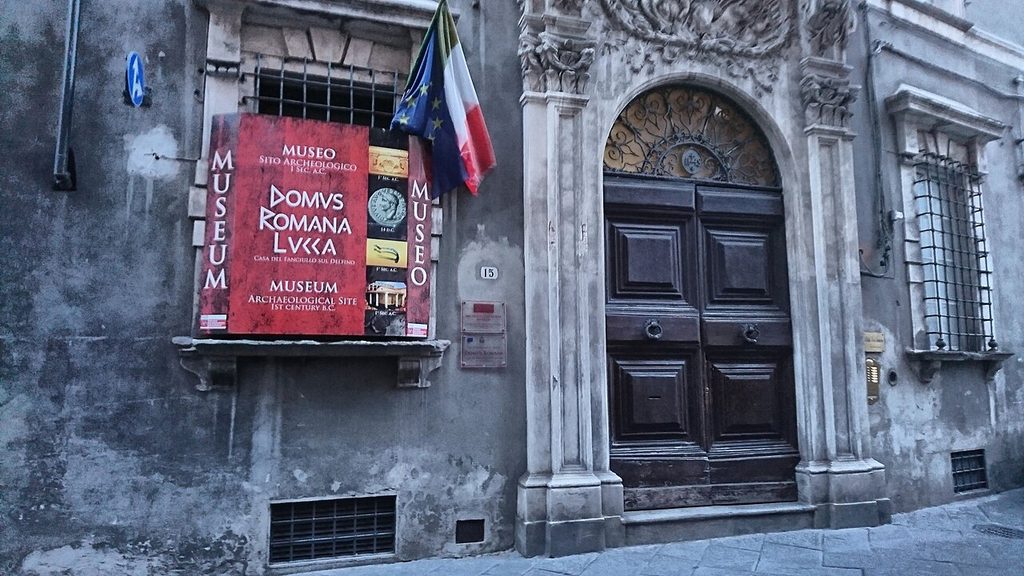
Facade of Domus Romana Museum – CC-BY-SA License – Credit: Deizenov

Unearthed in 2010 beneath a private building in the center of town, the Domus Romana (“Casa del Fanciullo sul Delfino”) showcases 2,000 years of continuous construction layers.

  • Operational Specs: €5.00–€8.00 guided entry | Via Cesare Battisti 15.
  • What You See: The preserved foundations of a 1st-century BCE Roman home, overlapping with Lombard stone walls, medieval foundations, and Renaissance cellars.
  • Best For: History buffs interested in seeing how Roman Luca was structured long before the medieval city took shape.

12. Attend a Nightly Puccini Recital at San Giovanni

Because Lucca is the birthplace of Giacomo Puccini, you can attend live operatic performances year-round through the Puccini e la sua Lucca festival.

  • Operational Specs: ~€30.00–€35.00 ticket | Starts at 7:00 PM daily (April–October).
  • Location: The historic Chiesa di San Giovanni near the Duomo.
  • Format: A 1-hour evening concert featuring professional sopranos, tenors, and a grand piano performing rotating selections of Puccini, Verdi, and Mozart arias. It serves as a great pre-dinner activity.

Click Here to Book a Tour of Lucca!

13. Walk Via Fillungo (Lucca’s Historic High Street)

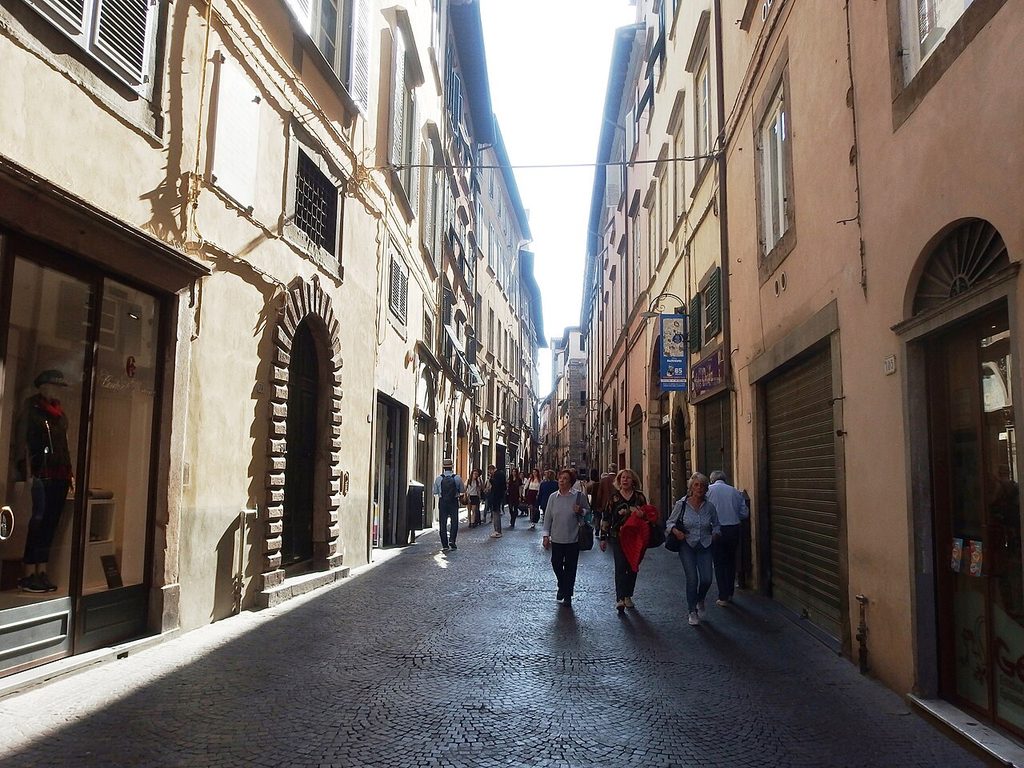
Shopping at Via Fillungo – CC-BY-SA License – Credit: Palickap

Running directly through the heart of the walled city from north to south, Via Fillungo is Lucca’s main pedestrian spine. Following the ancient Roman street grid, this narrow, winding cobblestone corridor is lined with medieval towers, silk-merchant palazzos, and Art Nouveau (Liberty style) shopfronts featuring polished dark wood and gold-leaf lettering.

  • Operational Specs: Free public pedestrian street | ~700 meters long | Stores generally open 9:30 AM–1:00 PM and 3:30 PM–7:30 PM.

Key Stops Along the Street:

  1. Gioielleria Carli (No. 95): Operating since 1655, this historic jewelry shop retains its original 18th-century furnishings and brass lamps.
  2. Torre delle Ore Junction: The clock tower rises directly over the street near the intersection with Via del Moro.
  3. Pasticceria Di Simo (No. 113): A historic café famously frequented by Giacomo Puccini, historic poets, and musicians.

Shopping & Passeggiata: It is the primary route for the traditional late-afternoon passeggiata (evening stroll). You will find everything from Italian leather goods, boutique fashion, and Tuscan wine shops to artisanal goldsmiths.

14. Relax in Piazza Napoleone (Piazza Grande)

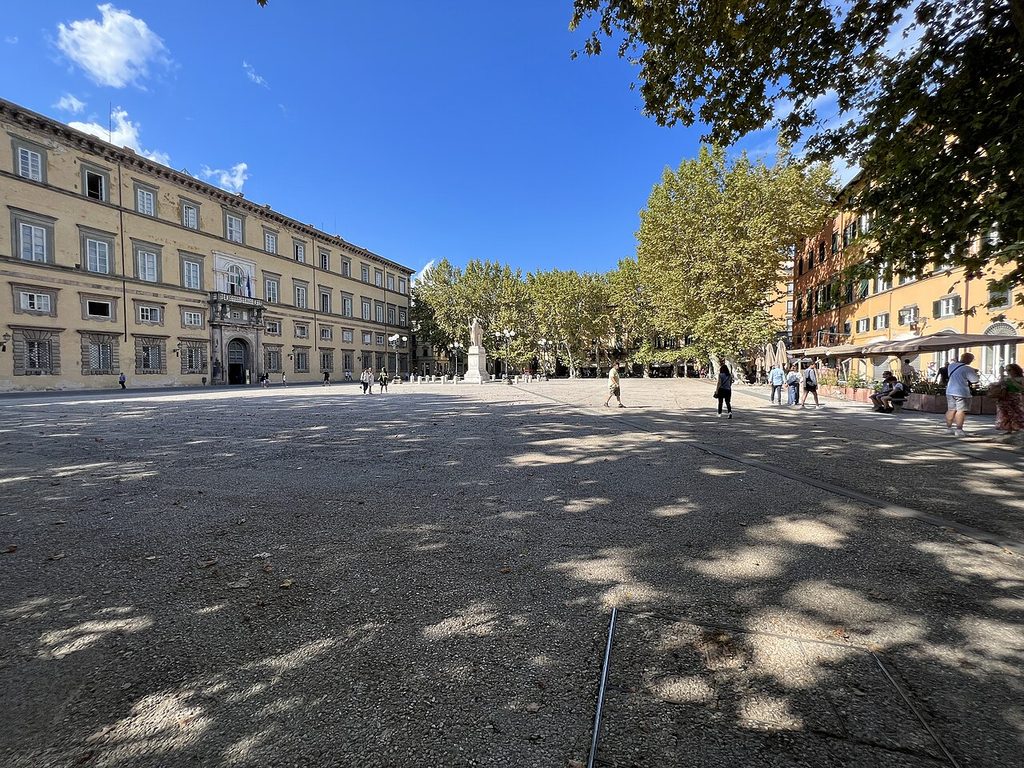
Large plaza in Piazza Napoleone – CC-BY-SA License – Credit: Chabe01

Known locally as Piazza Grande, Piazza Napoleone is Lucca’s largest open public square. Created in 1806 during the Napoleonic occupation by Elisa Bonaparte Baciocchi (Napoléon’s sister and Princess of Lucca), the square was designed to give a grand, French-inspired setting to the imposing Palazzo Ducale (Ducal Palace) that borders its western edge. Framed by double rows of sycamore trees, it serves as the civic and cultural heart of the city.

  • Operational Specs: Free public square | Open 24/7 | Located between Piazza San Michele and the Duomo.
  • Key Highlights & History:
  1. Palazzo Ducale: The massive government palace that housed Lucca’s rulers for centuries. Today, it hosts rotating art exhibitions and cultural events.
  2. Statue of Maria Luisa: The central marble statue actually depicts Maria Luisa of Bourbon (who succeeded the Bonapartes and commissioned the city’s aqueduct system), rather than Napoléon.
  3. Lucca Summer Festival Hub: Every July, this quiet square transforms into an open-air concert arena, hosting international rock and pop legends (past performers include The Rolling Stones, Elton John, and Green Day).
  4. Winter Ice Rink & Carousel: During the Christmas season, a traditional carousel and ice-skating rink fill the center of the square.
  • Traveler Tip: Grab a table under the plane trees at Café di Simo or a nearby terrace for an afternoon espresso. It is the best spot in town for people-watching and letting kids run around safely away from scooter traffic.

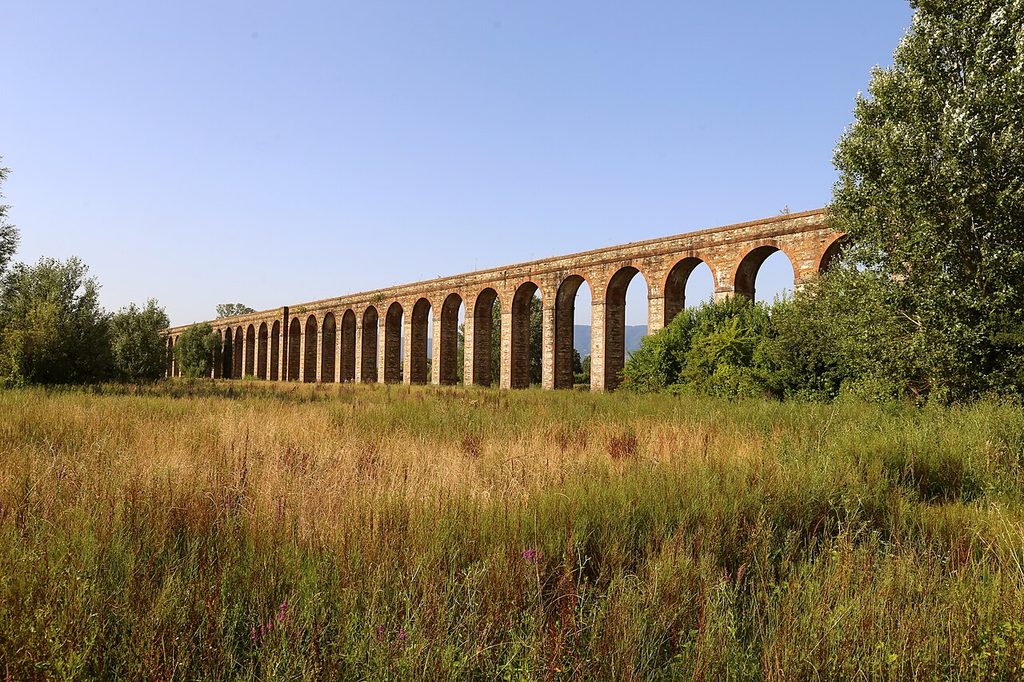
15. Walk Beneath the Arches of the Nottolini Aqueduct (Acdotto Nottolini)

Nattolini Aqueduct – CC-BY-SA Licese – Credit: Sailko

Located just south of Lucca Stazione (outside the city walls), this 19th-century neoclassical aqueduct features over 400 brick arches stretching over 3 kilometers into the countryside.

  • Operational Specs: Free access | Starts behind Lucca Train Station at the Tempietto di San Concordio.
  • Why Include It: It is the best nature walk near Lucca. A flat gravel trail runs directly under the arches through olive groves and fields, leading toward the Parole d’Oro (“Golden Words”) woodland springs in the Pisan hills.

Click Here to Book a Tour of Lucca!

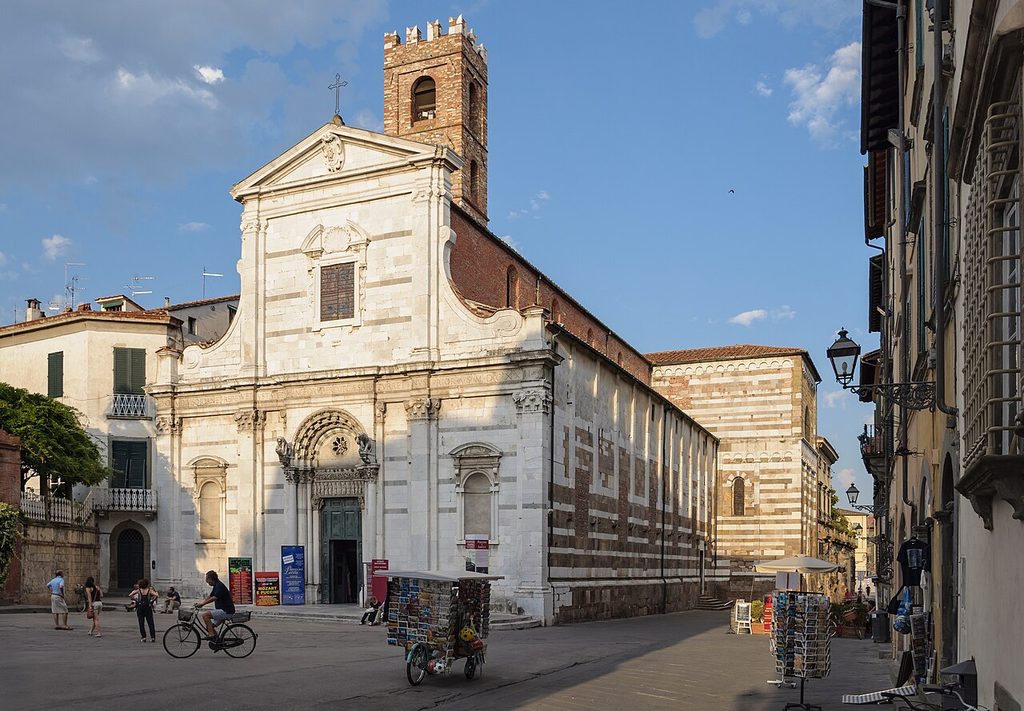
16. Descend Into the San Giovanni Underground Excavations

Facade of Chiesa dei Santi Giovanni e Reparata – CC-BY-SA License – Credit: Myrabella

While the nightly opera recitals take place inside the main nave of the Chiesa dei San Giovanni e Santa Reparata, few realize you can walk underneath the church floor.

  • Operational Specs: €4.00–€6.00 ticket | Open daily.
  • What You See: A elevated metal walkway suspends you directly over a multi-layered archaeological site containing a 1st-century Roman domus with mosaic floors, ancient thermal baths, and the 4th-century foundations of Lucca’s original cathedral baptistery.

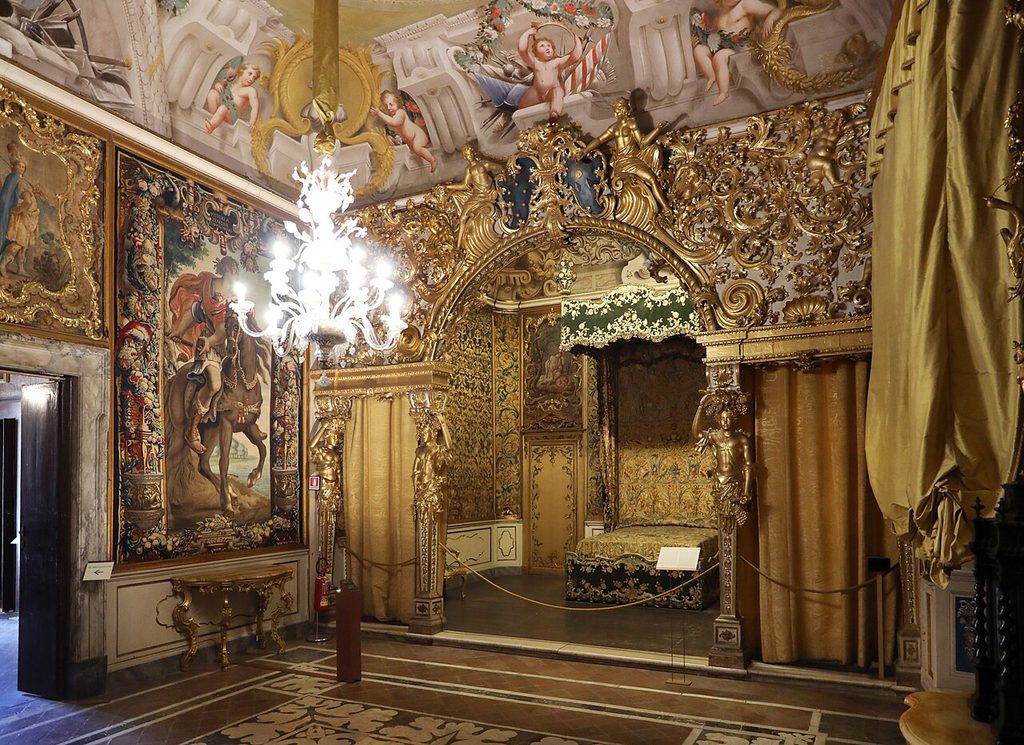
17. Discover Mannerist Masterpieces at Palazzo Mansi National Museum

Ornate interiors of Palazzo Mansi National Museum – CC-BY License – Credit: Sailko

Located on the western side of the historic center, this 17th-century merchant palace houses Lucca’s primary fine arts gallery (Pinacoteca Nazionale).

  • Operational Specs: €4.00 ticket | Via Galli Tassi 43.
  • Highlights: The palace itself is a museum—its most famous room is the hyper-ornate Gilded Alcove Bedchamber (Camera degli Sposi), featuring silk tapestries and gilded wood carving. The gallery collection includes paintings by Tintoretto, Titian, and Veronese.

18. Step Through the Medieval City Gates (Porta San Gervasio)

Before the massive 16th-century Renaissance walls were constructed, Lucca was protected by a smaller 13th-century medieval wall system.

  • Operational Specs: Free public viewing | Located on Via del Fosso.
  • Why Visit: Porta San Gervasio features two massive round sandstone towers framing a central pointed archWAY. Standing beside it allows you to visualize how much smaller medieval Lucca was compared to its Renaissance expansion.

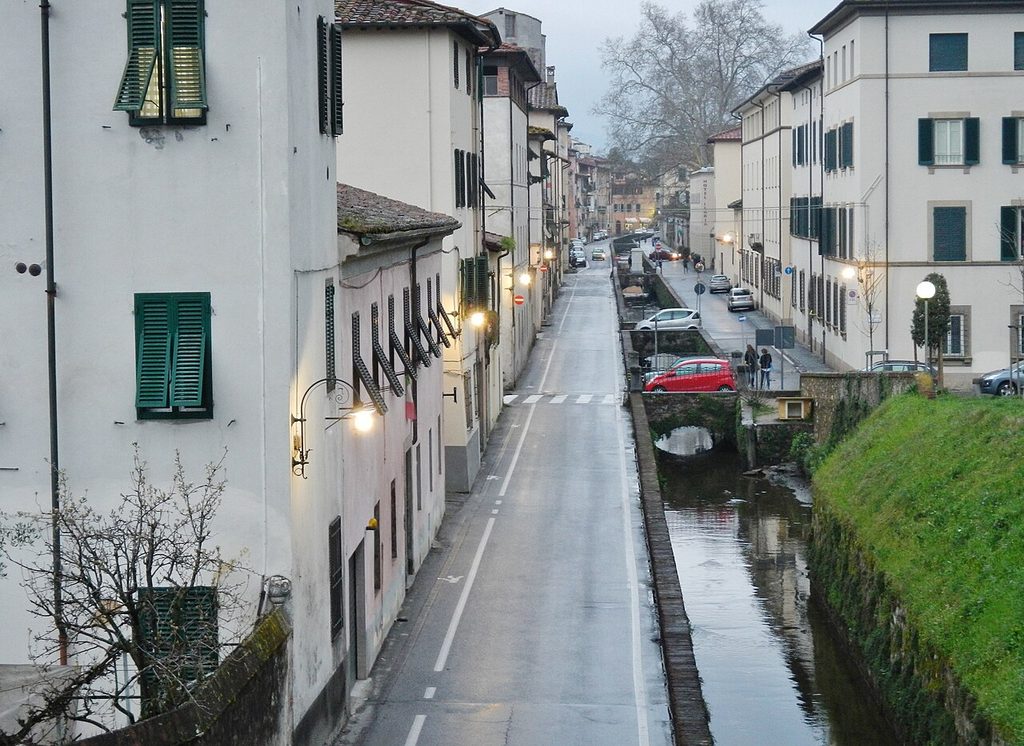
19. Stroll Along the Canal Street (Via del Fosso)

Canal Street, Lucca – CC-BY License – Credit: Qwesy Qwesy

Running along the eastern edge of the historic core, Via del Fosso is a quiet, leafy street built along a narrow, open water canal that once powered Lucca’s medieval silk mills.

  • Operational Specs: Free public street | Great quiet evening walk.
  • Why Visit: It offers a stark, peaceful contrast to the busier shopping streets like Via Fillungo. You will cross small stone bridges, pass historic fountains (including the Madonna fountain), and see old artisan workshops.

Click Here to Book a Tour of Lucca!

Tours in Lucca, Italy

Lucca Bikes and Bites Tour

Avoid the hassle of navigating Lucca’s historic center on foot or missing hidden local spots on your own with a relaxed bike tour through Lucca. Cycle along the city’s ancient walls and quiet streets while a guide brings local history and food culture to life. Pause to enjoy regional wine, brunch, snacks, and Tuscan specialties without needing to plan stops or reservations. Book this Lucca Bike Tour!

Discover Lucca’s Secrets on a Guided Walking Tour

Explore the traditional Tuscan town of Lucca on a walking tour of the historic center. Stroll the cobblestone streets, bustling piazzas and old Renaissance walls; trace the city’s Roman past along Via San Paolino and Piazza San Michele; and see the birthplace of local composer Giacomo Puccini. Keep your camera poised as you admire the medieval buildings along Via Fillungo, peek inside San Frediano church and visit landmarks like the Cathedral of San Martino, Piazza Anfiteatro and Torre delle Ore. Book this Lucca Walking Tour!

Flavours of Lucca – Food Walking Tour

Discover Lucca through its food on this morning walking tour around the city. Walking with a local guide who’s passionate about the city, you’ll get the lowdown on Lucca’s history and culture through insightful commentary, and have the chance to sample Tuscan specialities including breakfast, snacks, and a light brunch. Nice touch: The group is capped at just 12 people for a more personal experience. Book this Food Walking Tour!

Lucca’s Ultimate Food Tour

Get an introduction into Lucca’s traditional cuisine and modern dining scene from a local insider with this exclusive food tour. Sample the city’s most beloved pasta dish, a street food staple, charcuterie and wine, and even artisan chocolate and dessert as you stroll through the old town. Learn about Lucca and its culinary culture from your guide plus take in a few of the city sights along the way. Book this Lucca Ultimate Food Tour!

Private Walking Tour of Lucca

Lesser-known than Tuscan powerhouses such as Florence and Siena, Lucca is nevertheless a gem of a town, with plenty to see. Avoid missing out on important information and sights as you explore the historic center and Renaissance-era walls with a guide, discovering monuments and public squares along with hidden passageways and offbeat sights. Book this Private Walking Tour of Lucca!

Click Here to Book a Tour of Lucca!

Where to Stay in Lucca, Italy

When choosing where to stay in Lucca, the most critical logistical decision is ZTL (Traffic Limited Zone) access.

If you are arriving by train or bus, staying inside the walls offers maximum historic charm and doorstep walkability. If you are arriving by rental car, staying just outside the walls eliminates driver anxiety, parking fees, and the threat of automated €150 camera fines.

1. Luxury & Historic Palaces (Inside the Walls)

Grand Universe Lucca (Autograph Collection)

Located on Piazza del Giglio right next to Piazza Napoleone, this fully restored historic hotel overlooks the city’s main theater.

  • Vibe: Elegant, refined Italian hospitality with modern high-end amenities.
  • Why Stay Here: Offers prime central walkability, an exquisite rooftop cocktail lounge (Sommità) with views over the terracotta roofs, and an underground wine cellar.
  • Logistics & ZTL: Located inside the ZTL, but offers dedicated valet parking and automated license plate logging for guests with cars.

Palazzo Dipinto

A sleek, contemporary boutique hotel tucked away in a quiet plaza (Piazza del Dipinto) near San Michele in Foro.

  • Vibe: Minimalist Italian design set within a grand 13th-century merchant palace.
  • Why Stay Here: Spacious rooms, high ceilings, excellent breakfast spreads, and a quiet courtyard atmosphere just steps from high-street shopping.

2. Boutique & Character Stays (Inside the Walls)

Hotel Palazzo Alexander

A classic Tuscan boutique hotel located in the quiet western corner of the historic center.

  • Vibe: Traditional Renaissance elegance featuring marble bathrooms, antique wooden furniture, and original parquet floors.
  • Why Stay Here: Highly personalized service, complimentary afternoon tea, and a peaceful night’s sleep away from noisy restaurant squares.

La Boheme B&B

An intimate, opera-themed bed & breakfast named in honor of Lucca’s native composer, Giacomo Puccini.

  • Vibe: Cozy, artistic, and welcoming.
  • Why Stay Here: Situated steps from Via Fillungo and Puccini’s birthplace museum. Features individually decorated rooms named after famous opera characters.

3. Budget-Friendly & Guesthouses (Inside the Walls)

B&B La Terrazza di Via Elisa

Located on the quiet eastern side of the historic core near Porta Elisa and the Botanical Gardens.

  • Vibe: Authentic, family-run Tuscan guesthouse.
  • Why Stay Here: Clean, comfortable rooms and a charming private garden terrace where breakfast is served in spring and summer.
  • Transit Tip: Just a flat 10-minute walk from Lucca Stazione via Porta San Pietro.

Hostel San Frediano

Set inside a grand 14th-century former monastery right near the northern city walls.

  • Vibe: Social, historic, and budget-conscious.
  • Why Stay Here: Offers both private en-suite rooms and dorm beds, featuring vaulted ceilings, wide stone corridors, and a massive private garden courtyard.

4. Best Stays for Drivers (Outside the Walls)

Hotel Albergo Ilaria

(Technically inside the walls, but built right into the historic ramparts with private driveway access)

  • Why It’s Perfect for Drivers: Offers a private underground parking garage with an automated entry route that bypasses deep city ZTL cameras. Includes complimentary bikes for all guests and a daily free afternoon aperitivo spread.

Hotel San Marco

Located just 500 meters north of Porta Santa Maria outside the city walls.

  • Why It’s Perfect for Drivers: Features dedicated private parking on-site. You can park your car risk-free and walk through the city gate into the historic center in under 7 minutes. Includes a private outdoor swimming pool—a rare luxury for Lucca hotels.

Essential Booking & Stay Tips for Lucca

  1. Book Early for Peak Events: Accommodation prices spike and sell out months in advance for two major annual events: the Lucca Summer Festival (July) and Lucca Comics & Games (late October/early November).
  2. Elevator Check: Many B&Bs inside the walls occupy 3rd or 4th floors of 16th-century buildings without elevators. If you are traveling with heavy luggage or have mobility constraints, always verify elevator access (ascensore) before booking.
  3. Air Conditioning Warning: While standard in luxury hotels, smaller B&Bs in historic buildings may have restricted summer AC controls due to local municipal heritage regulations. Double-check summer cooling policies if visiting in July or August.

Click Here to Book a Tour of Lucca!

Where to Eat in Lucca, Italy

1. The Lucchese Dish Cheat Sheet

A quick menu cheat sheet so you know what to order when looking at local menus in Lucca:

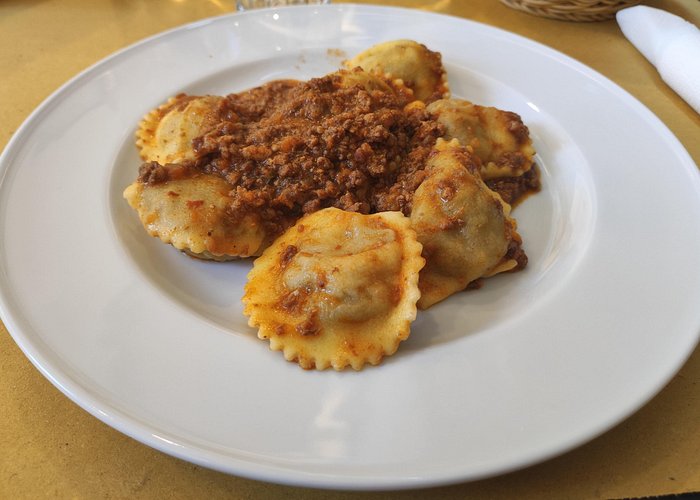
  • Tordelli Lucchesi: The city’s definitive dish. Thick, crescent-shaped egg pasta stuffed with minced beef, pork, bread soaked in milk, Swiss chard, and nutmeg, topped with a rich meat ragù.
  • Zuppa di Farro: A hearty, comforting soup made with local Garfagnana emmer wheat, borlotti beans, olive oil, and rosemary.
  • Rovellina alla Lucchese: Breaded veal cutlets simmered in a rich tomato sauce with capers and black olives.
  • Cecina: A crispy, savory flatbread made from chickpea flour, water, and olive oil, baked in a copper pan and finished with black pepper.
  • Buccellato: Lucca’s historic sweet bread studded with raisins and flavored with aniseed, traditionally enjoyed with espresso or dessert wine.

2. Vetted Restaurant Recommendations (By Category)

A. Authentic Trattorias & Local Favorites

  • Trattoria da Giulio (Near Porta San Donato)
    • The Vibe: A noisy, historic institution open since 1945, serving paper-tablecloth comfort food at budget-friendly prices.
    • What to Order: Tordelli Lucchesi or braised veal cheek.
    • Logistical Note: Perfect for lunch after exploring the western walls.
  • Trattoria Da Gigi (Central Historic Core)
    • The Vibe: Efficient, cozy, and hugely popular with locals. Cutlery is served in vintage tomato tins.
    • What to Order: Tagliatelle with white ragù, vegetable budino, and homemade tiramisu.
    • Logistical Note: Reservations are essential.

B. Historic & Fine Dining

  • Buca di Sant’Antonio (Near Piazza San Michele)
    • The Vibe: Operating continuously since 1782, featuring white tablecloths, copper pots hanging from the ceiling, and refined Tuscan classics.
    • What to Order: Roasted kid goat (capretto), homemade pasta with wild boar, or spelt soup.
  • Cantine Bernardini (Via del Cinto)
    • The Vibe: Housed in a 15th-century palazzo cellar with an extensive wine collection and creative twists on local ingredients.

C. Quick Bites & Street Food

  • Pizzeria da Felice (Via Sant’Agnese)
    • The Vibe: Tiny, standing-room-only bakery serving Lucca’s best street food since 1910.
    • What to Order: A hot slice of Cecina (chickpea pancake) wrapped in wax paper.
  • Da Ciacco (Piazza Napoleone)
    • The Vibe: Gourmet sandwich bar specializing in artisanal Tuscan cured meats, pecorino cheese, and craft wines.

D. Artisanal Gelato

  • Gelateria De’ Coltelli (Via del Fosso)
    • The Vibe: Award-winning, all-natural gelateria set along the canal street.
    • What to Try: Seasonal fruit sorbets, pistachio, or local candied ginger.

Click Here to Book a Tour of Lucca!

Frequently Asked Questions (FAQs)

1. Is Lucca worth visiting on a day trip from Florence or Pisa?

Yes. Because Lucca’s main train station sits just 350 meters outside the historic Renaissance walls, it is one of the easiest day trips in Tuscany. Direct regional trains take 25 minutes from Pisa and 1 hour 20 minutes from Florence, dropping you right at the edge of the pedestrianized city center.

2. How much time do you need in Lucca?

A single full day (6–8 hours) is enough to cover the major highlights: cycling the Renaissance wall loop, climbing the Torre Guinigi, exploring Piazza dell’Anfiteatro, and enjoying a traditional lunch. However, staying 1 or 2 nights allows you to experience the city after day-trippers leave, attend an evening Puccini concert, and explore lesser-known sights like the Nottolini Aqueduct or Palazzo Mansi.

3. Can you walk or cycle the walls of Lucca for free?

Yes. The 4.2-kilometer elevated wall park (Mura di Lucca) is completely free and open to the public 24/7. You only pay if you choose to rent a bicycle, e-bike, or pedal buggy from one of the local rental shops near the city gates (typically €4–€5 per hour).

4. Is Lucca walkable, and is it suitable for travelers with mobility concerns?

Lucca is one of the flatter, most walkable towns in Tuscany, unlike hill towns such as San Gimignano or Siena. The historic center inside the walls is almost entirely pedestrianized. While the streets are cobblestone, main thoroughfares are flat, and paved ramps lead up to the wall promenade for wheelchair and stroller access.

5. Can I drive inside the historic center of Lucca?

No, unless you have prior authorization. The area inside the walls is a strict ZTL (Zona a Traffico Limitato) monitored 24/7 by automated fine cameras. Non-resident drivers will face heavy fines. If you arrive by rental car, park in the designated paid lots outside the walls (such as Parcheggio Carducci or Parcheggio Mazzini). If staying overnight inside the walls, contact your hotel 48 hours prior so they can register your license plate.

6. What is the best time of year to visit Lucca?

May through June and September through October offer the best combination of warm weather, lower humidity, and active outdoor dining. Late October/early November sees massive crowds for Lucca Comics & Games, while July brings live music during the Lucca Summer Festival.

7. What is the closest airport to Lucca?

The closest airport to Lucca is Pisa International Airport (Galileo Galilei Airport – PSA), located roughly 18 to 20 kilometers (11–12 miles) south of the city.

Click Here to Book a Tour of Lucca!

Filed Under: Italy

Primary Sidebar

Categories

  • Italy

Copyright © 2026 · Genesis Sample on Genesis Framework · WordPress · Log in